 by Joseph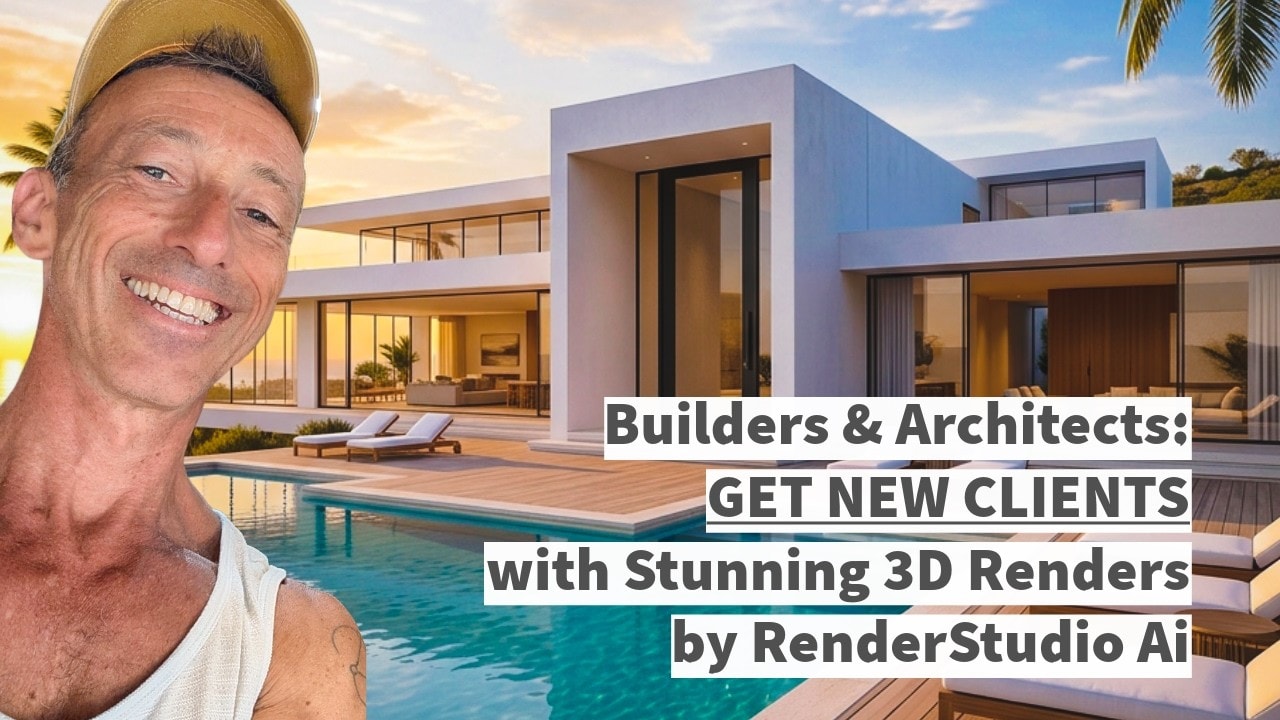
When you work in Costa Rica Real Estate For Sale, presentation matters. A floor plan by itself is useful, but it does not always spark the imagination the way a finished visual can. That is exactly where RenderStudio comes in. The idea is simple. Upload a floor plan, add style direction, choose a few architectural settings, and let the system generate polished 3D renders for villas, homes, and even small residential clusters.
What makes this especially interesting for Costa Rica Real Estate For Sale is speed. Instead of waiting until a full architectural visualization package is complete, you can test concepts early, compare looks, estimate positioning, and get a fast visual language for a development idea. It is not a replacement for an architect, and I want to be very clear about that. It is a design exploration tool, a concept accelerator, and in the right hands it becomes incredibly powerful.
This walkthrough shows how I used the platform live to create a modern villa from a floor plan I had never used before, refine the result with references, and then push things further by generating a multi home cluster concept.
The bigger context behind the tool
My work sits at the intersection of property, development, design, and digital systems. On the real estate side, the focus is on investment opportunities from Tamarindo down to Nosara. On the digital side, the focus is building tools that solve real problems. RenderStudio grew out of that same mindset.
For anyone active in Costa Rica Real Estate For Sale, there is a constant need to translate an idea into something visual and persuasive. A lot can happen between an initial sketch and a final build. Early renders help clarify direction, reveal inconsistencies, and create momentum around a project.

There is also a practical reality here. Real estate and development in Costa Rica often involve land, custom homes, boutique communities, and buyers who want to understand the vision before construction is complete. Tools like architectural rendering and concept visualization are no longer optional extras. They are central to how projects are presented.
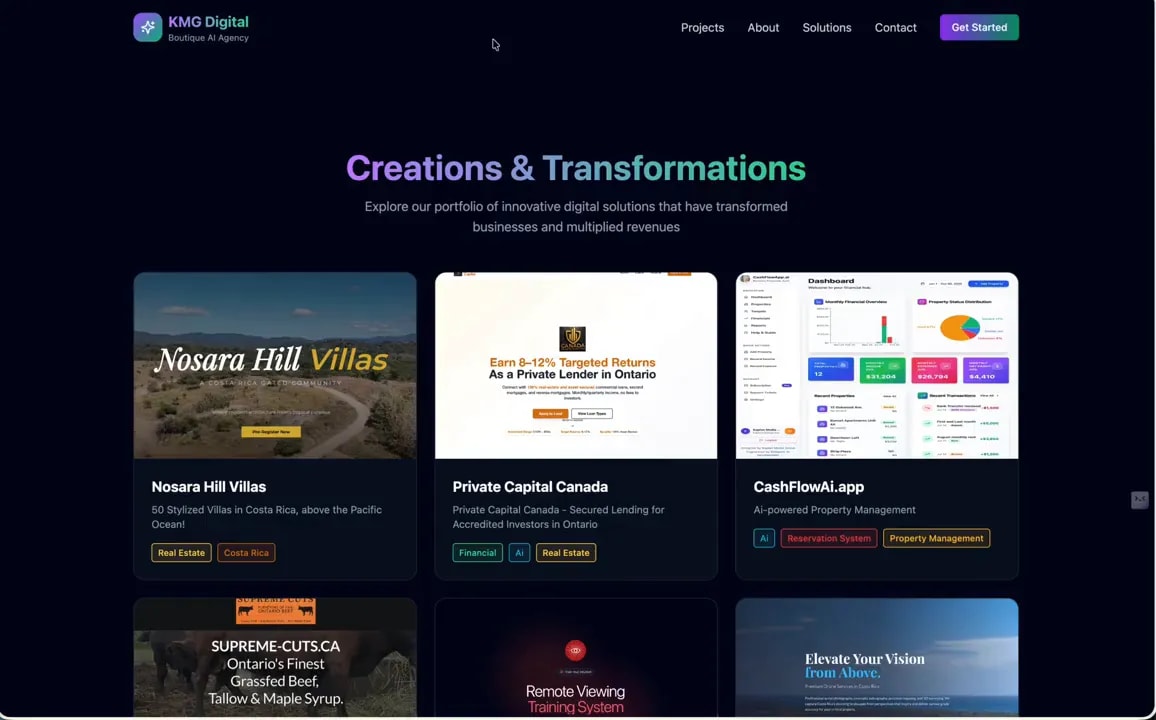
What RenderStudio actually does
At its core, RenderStudio can create 3D render concepts from:
- Floor plans
- Reference images
- Written design instructions
- Previously generated projects used as style references
It can generate a single villa, a house, or a group of residences. It also includes customization for size, roof type, ceiling height, decks, pools, gardens, style direction, day or night rendering, and cluster layout ideas.
That flexibility matters in Costa Rica Real Estate For Sale because a beach villa in Nosara needs a very different visual language than a mountain home, a village concept, or a rental focused compound.
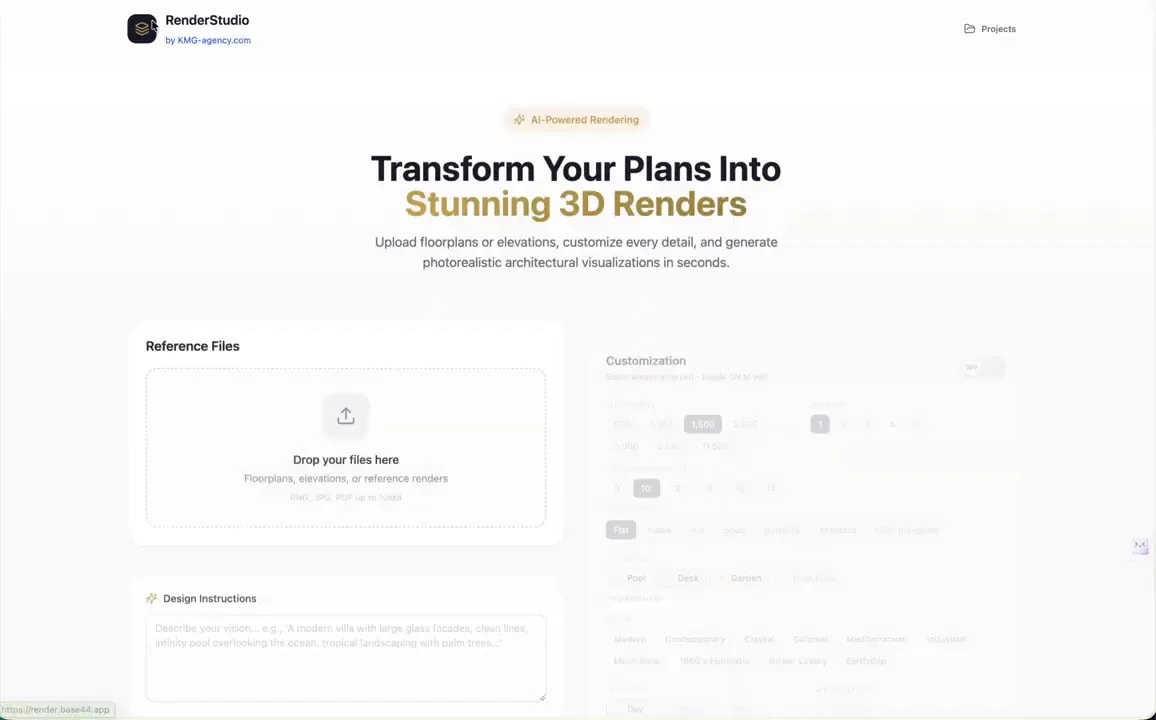
Starting with a brand new villa floor plan
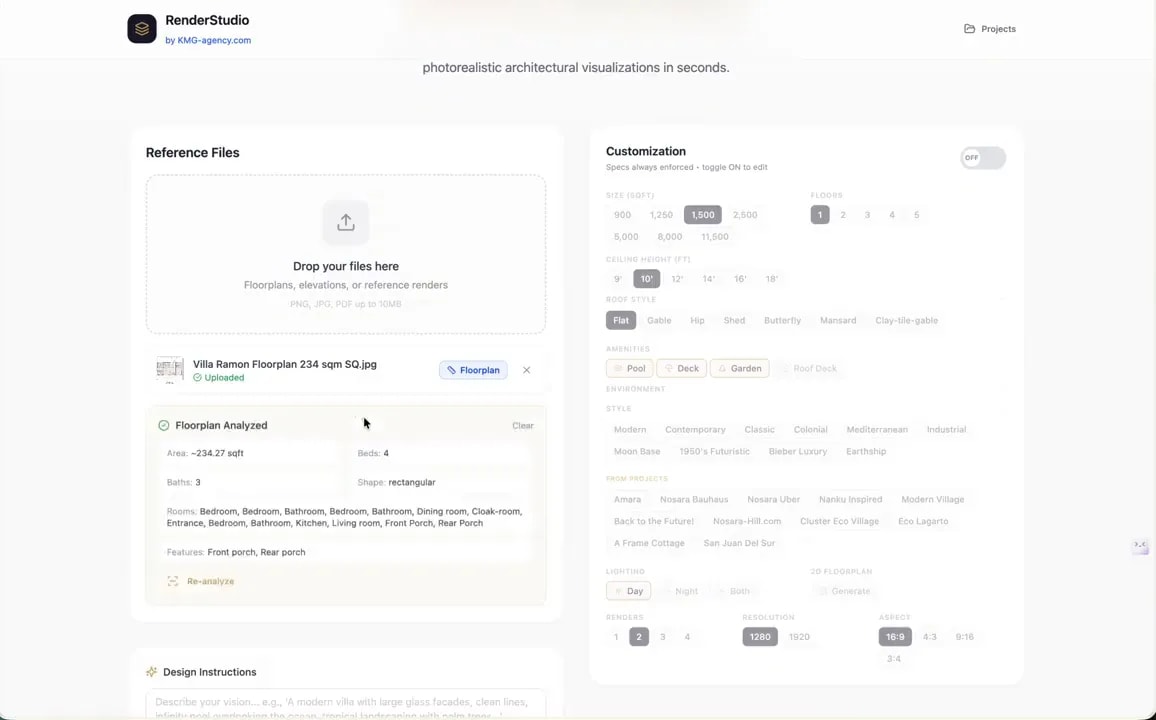
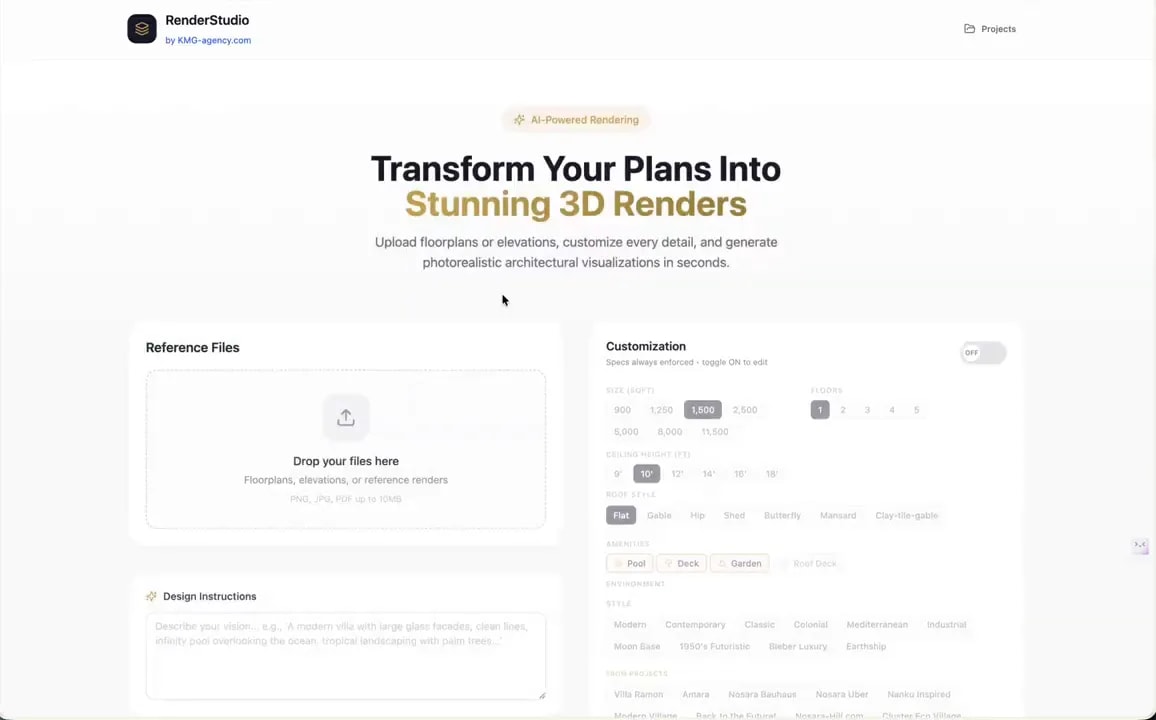
The first test was simple on purpose. I dragged in a floor plan for a project called Villa Ramon. This was a 234 square meter design, roughly 2,600 square feet. I had never used this particular plan inside the tool before, which made it a proper experiment instead of a rehearsed demo.
Once the plan was uploaded, the AI analyzed it and identified the likely room structure. The interpretation was not meant to produce construction documents. It was there to give the rendering engine enough architectural understanding to begin shaping the exterior concept.
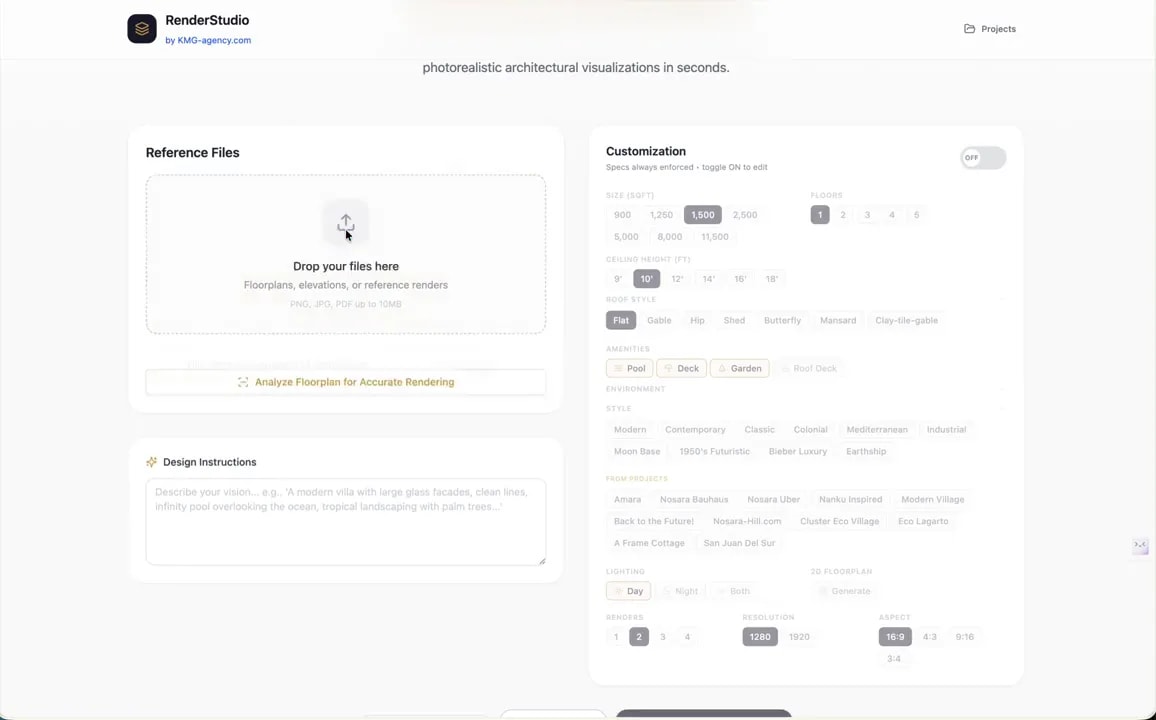
That first analysis stage is one of the key pieces. It transforms a static 2D plan into something the system can reason about. In plain English, it tries to understand what kind of building it is dealing with before visualizing the form.
Customizing the villa before generation
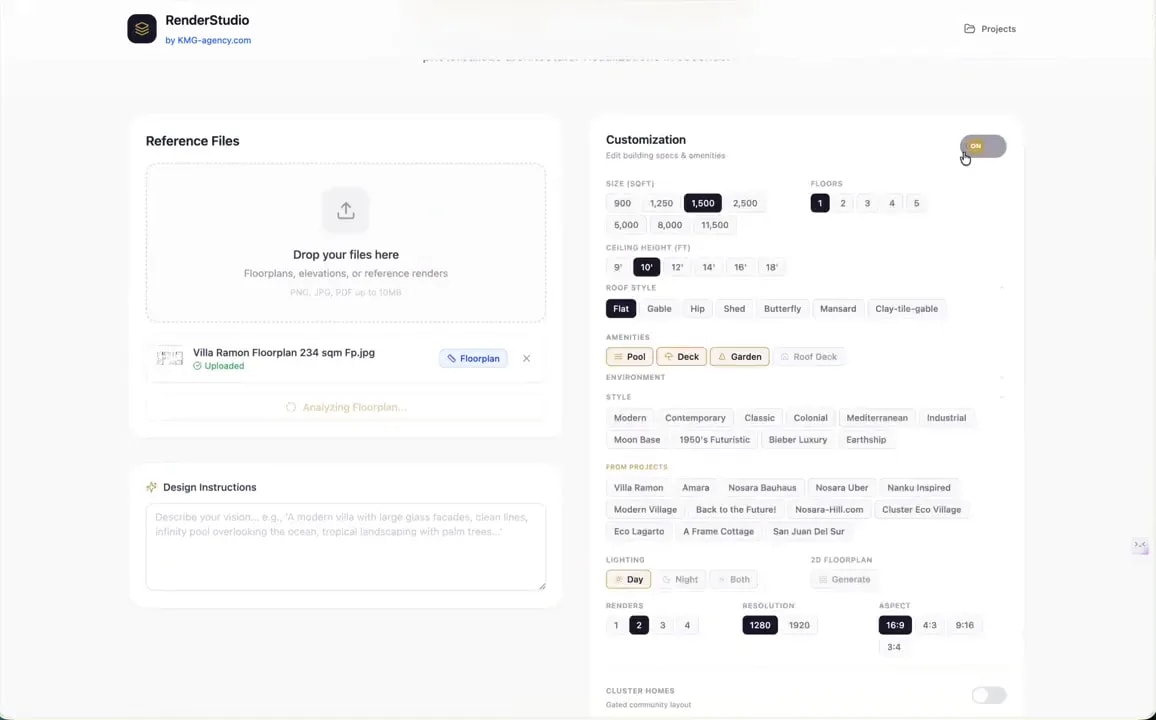
With the floor plan uploaded, I moved into the customization panel. For this concept I selected settings close to the design intent:
- Size: 2,500 square feet
- Stories: two story
- Ceilings: initially 14 feet, later pushed higher
- Roof: flat roof
- Pool: yes
- Deck: yes
- Garden: yes
- Roof deck: yes
- Style: modern
- Render mode: both day and night
One small but important detail is that selecting both day and night automatically doubles the number of outputs. That sounds obvious, but it is useful because it gives instant range. A property can feel entirely different under daylight than it does with warm evening lighting.

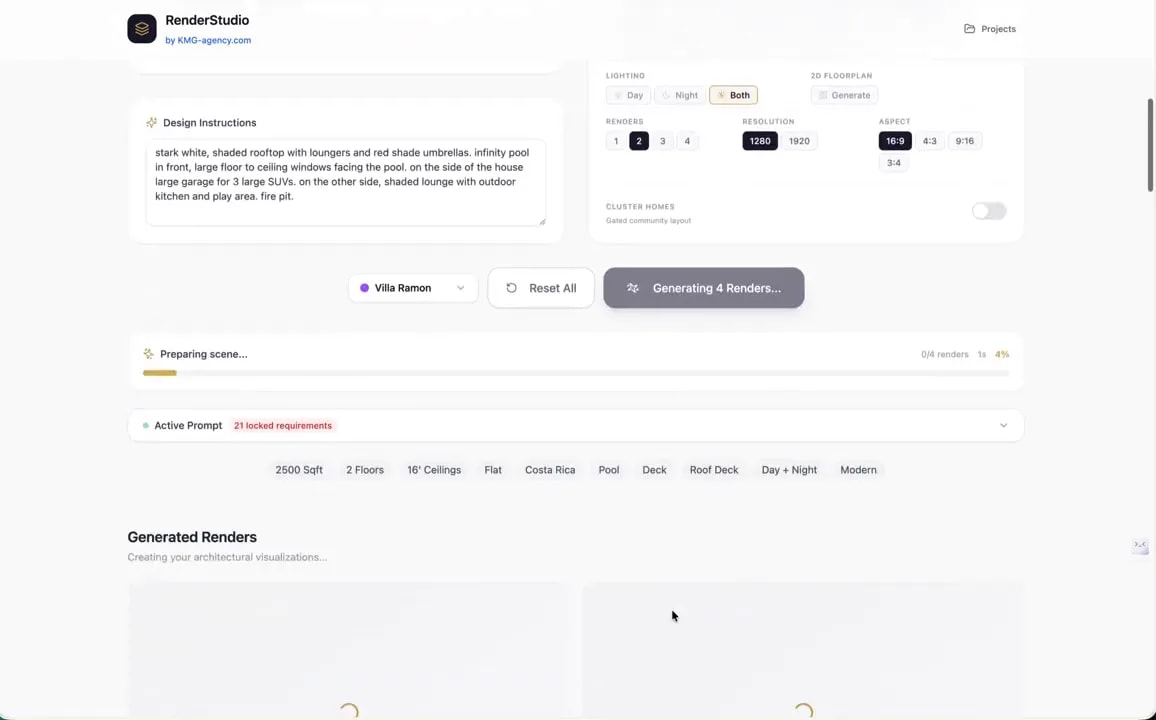
Then came the written direction. This is where things become much more interesting. I added design instructions for a stark white villa, shaded rooftop loungers, red umbrellas, an infinity pool, large floor to ceiling windows, a garage for large SUVs, and an outdoor lounge with kitchen and play area. I even threw in a fire pit, which is admittedly not exactly a Costa Rica essential, but sometimes you test the boundaries just to see what the system will do.

This mix of structured settings and freeform written guidance is where a lot of the creative control lives. You are not only selecting toggles. You are teaching the render what kind of story the building should tell.
The automatic cost estimate is a useful bonus
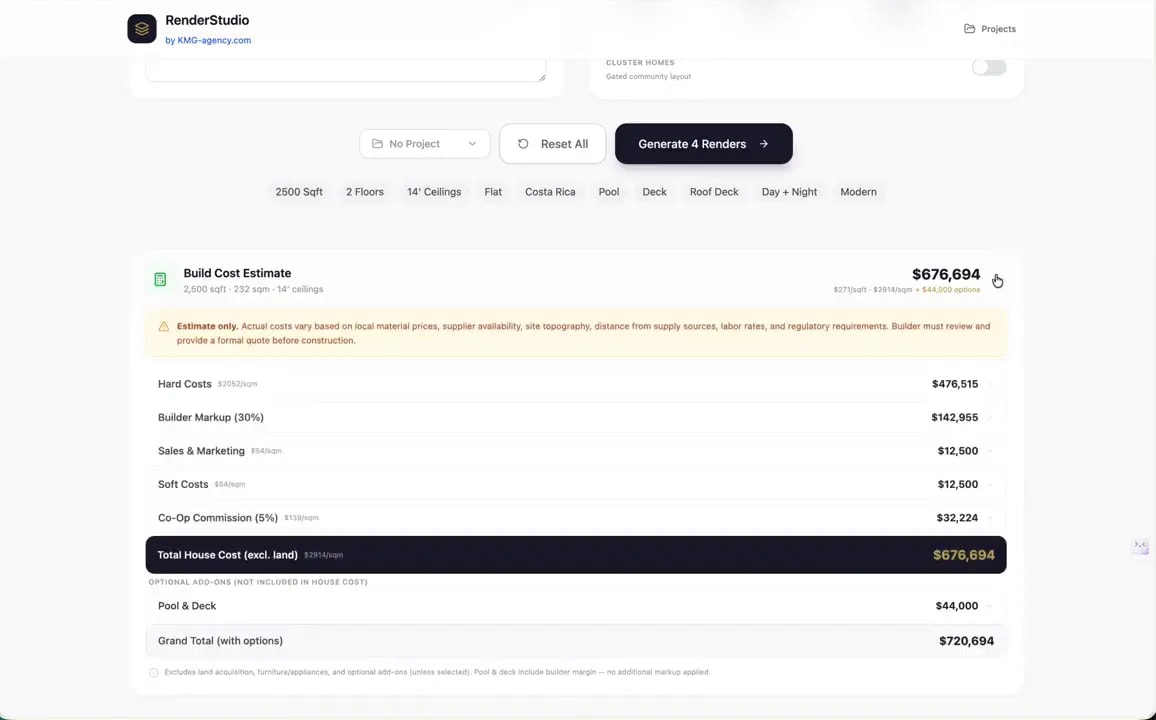
One feature I like is the dynamic cost estimate. As you adjust scale and luxury level, the estimate updates automatically. It is based on an internal logic that weighs design complexity, project size, and expected build level.
For anyone evaluating Costa Rica Real Estate For Sale, this is not a final budget and should never be treated like one. But as a directional planning tool, it is helpful. It lets you compare concept ambition against probable build intensity very early in the process.
First generation results for Villa Ramon
After hitting generate, the system processed the floor plan, the selected options, and the written instructions. There are a lot of moving parts behind the scenes. It analyzes architecture, interprets references when present, sets lighting conditions, and composes the scene.
Then the results started coming back.
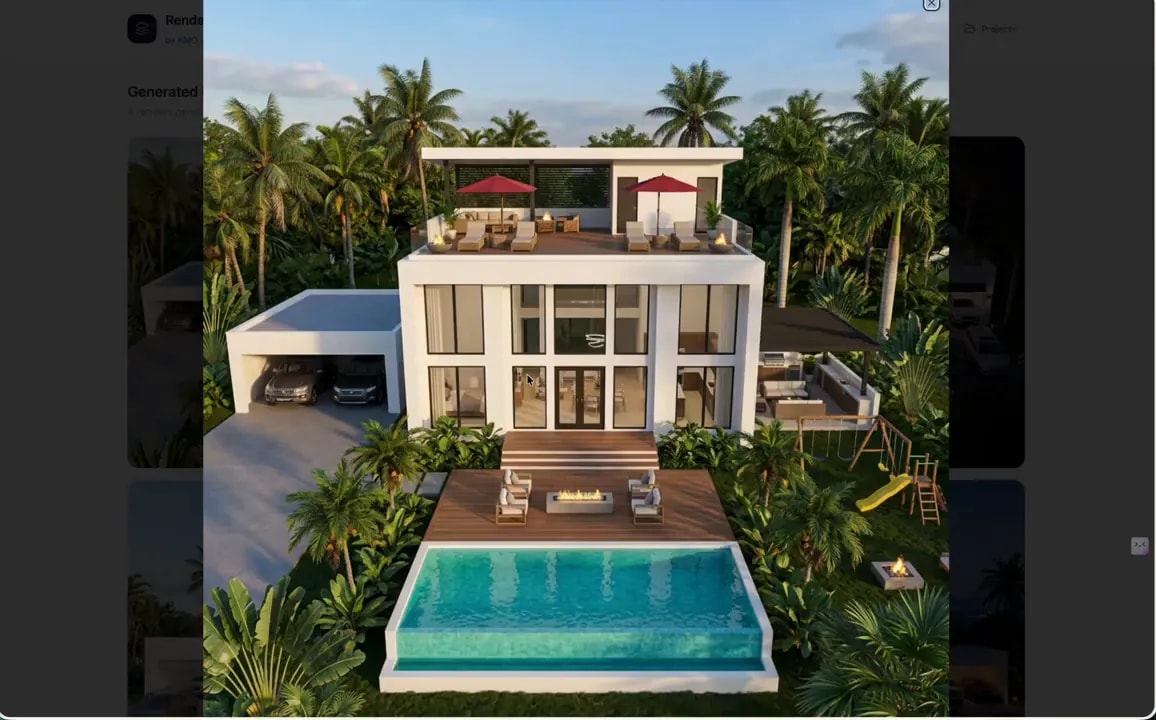
The first villa outputs were actually quite strong. The modern language came through. The high ceilings were visible. The red rooftop shade detail appeared. The pool and outdoor zones were there. The garage was present, even if not every instruction landed exactly as requested.
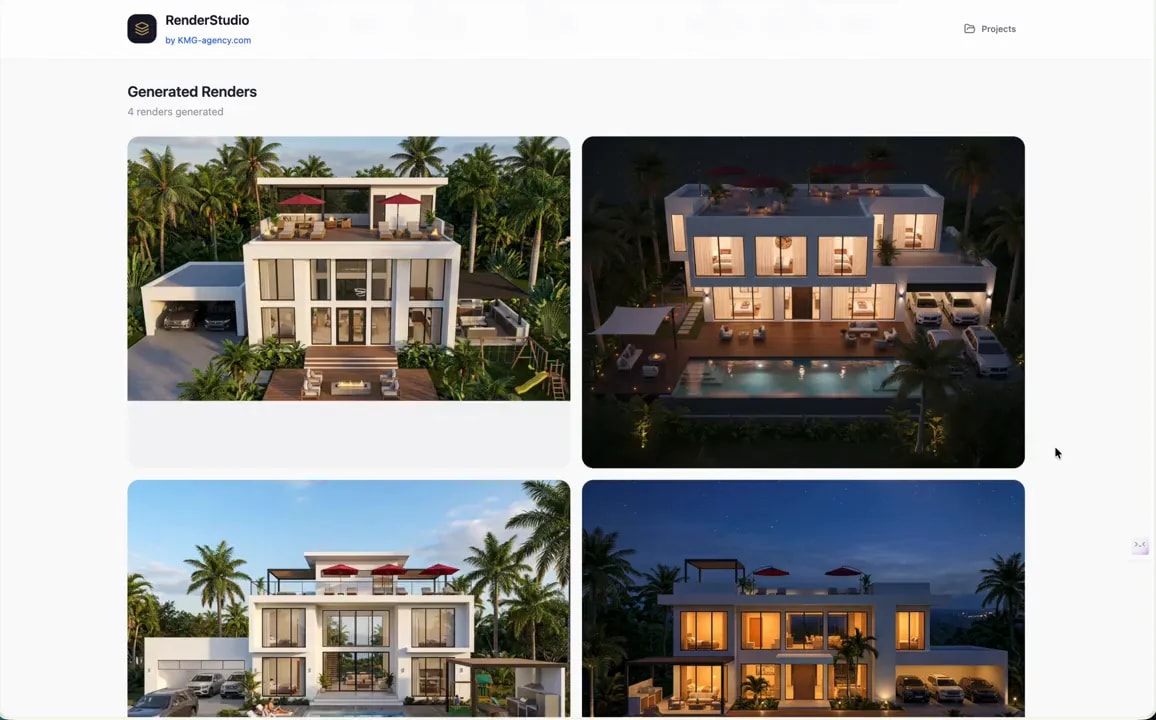
That is the nature of AI rendering. It interprets. It does not obey with mechanical precision every single time. Sometimes it gives you two cars when you asked for three. Sometimes the deck is smaller than you wanted. Sometimes it improvises in ways you did not expect. The trick is understanding that the first output is not the finish line. It is the opening move.
Using render history to iterate faster
Every generated image goes into render history, and this becomes one of the most practical parts of the workflow. If one image is close to what you want, you can immediately use it as a reference for the next generation.
That means you are no longer starting from scratch. You are building momentum. The system begins with your floor plan, then learns from your preferred output, then moves toward a more refined version in the next pass.
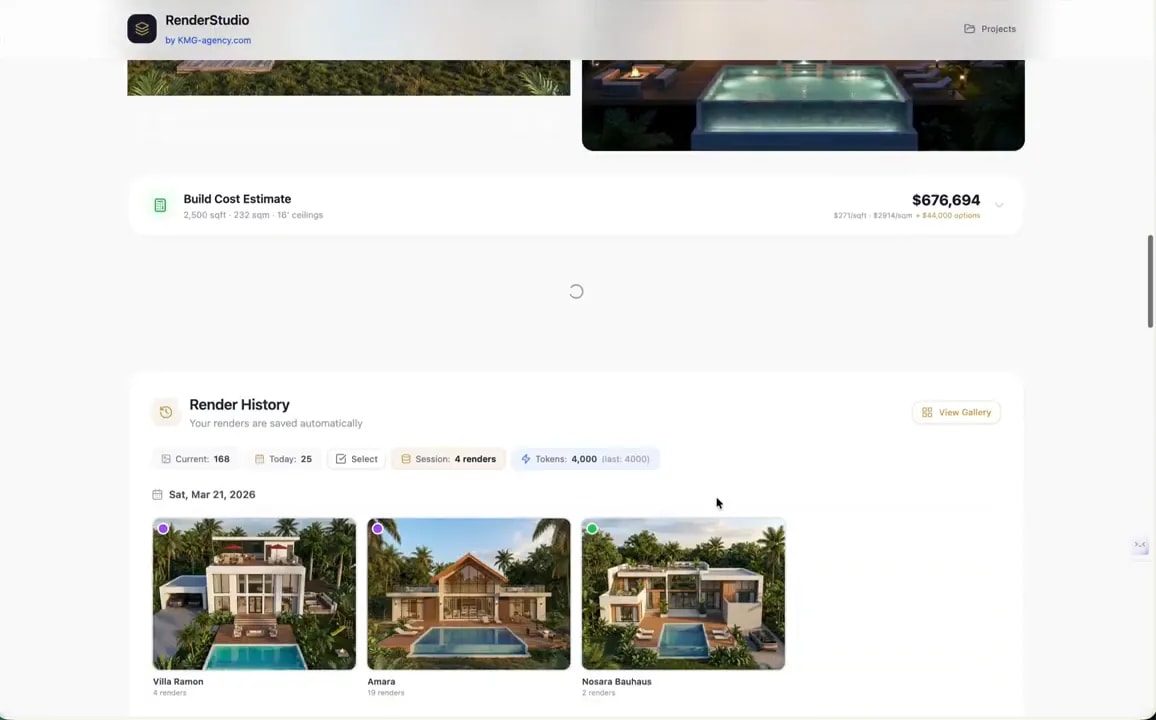
For concept work in Costa Rica Real Estate For Sale, that iterative flow is gold. You can move from rough idea to more polished identity in a very short cycle.
Second pass with a style reference
For the next round, I changed the setup a bit. I used a different Villa Ramon floor plan variation and activated a prior project as a style reference, something from a higher end Nosara series. This was deliberate. I wanted to see how much a strong reference would influence the result.
The answer was clear. The reference had a huge impact. In fact, it overrode several of the other settings. I had asked for a one story concept, but because the style reference was strong, the result leaned into that higher end multi level look anyway.
That is not a flaw so much as a reality of how reference driven generation works. If you hand the system a powerful visual precedent, it pays attention. A lot of attention.
The second set of renders came back more dramatic and more refined. I got stronger architectural character, a better feeling of luxury, nice surfboard placement, a visible fire pit, and a much richer outdoor living composition.
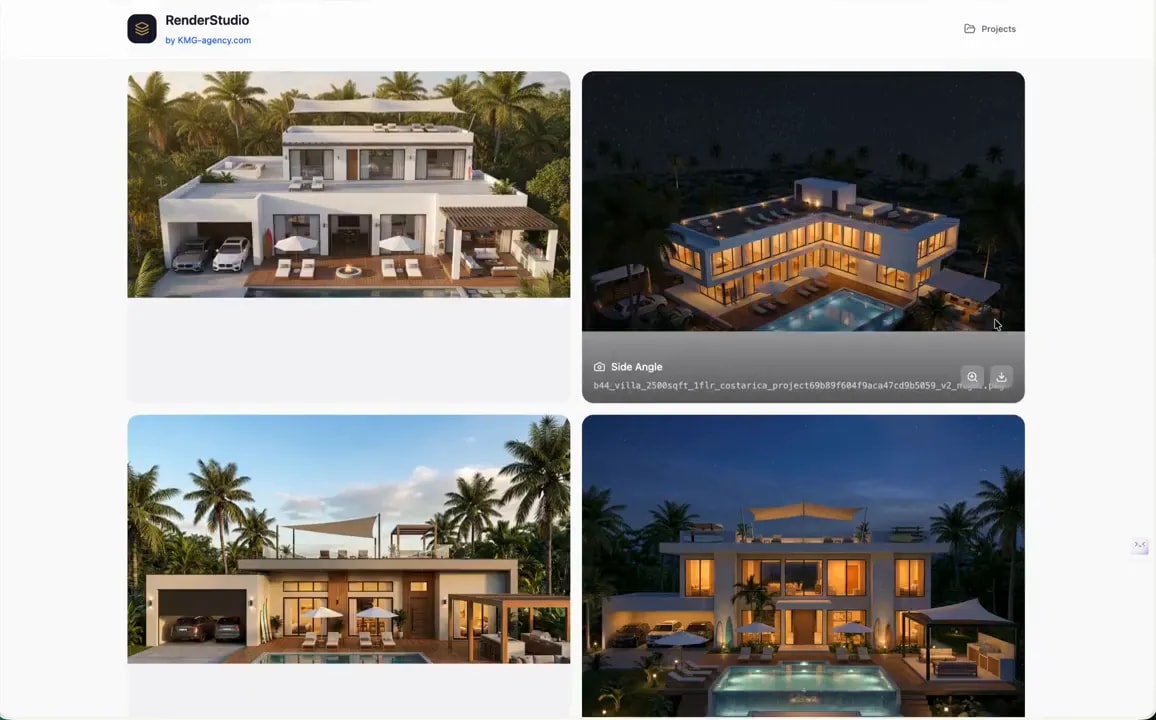
This is the point where the workflow becomes very practical. You can decide which version best matches the vision, move the renders into a project, and continue refining from there.

What this means for Costa Rica Real Estate For Sale
For listings, land development, and off plan concepts, this kind of visualization opens up real possibilities. A parcel with a good location but no built product can suddenly be paired with a credible design direction. A villa concept can be shown in daytime and nighttime mood. A branded style language can emerge before full marketing collateral is assembled.
That is especially valuable in Costa Rica Real Estate For Sale, where architecture, lifestyle, and setting all matter deeply. Buyers are often responding to an experience, not just a square footage count.
For broader market context, resources like Investopedia’s real estate overview and planning references from design organizations can help frame where concept visualization fits into the property cycle, from entitlement and design all the way through marketing and sales.
Testing the cluster tool for a village concept
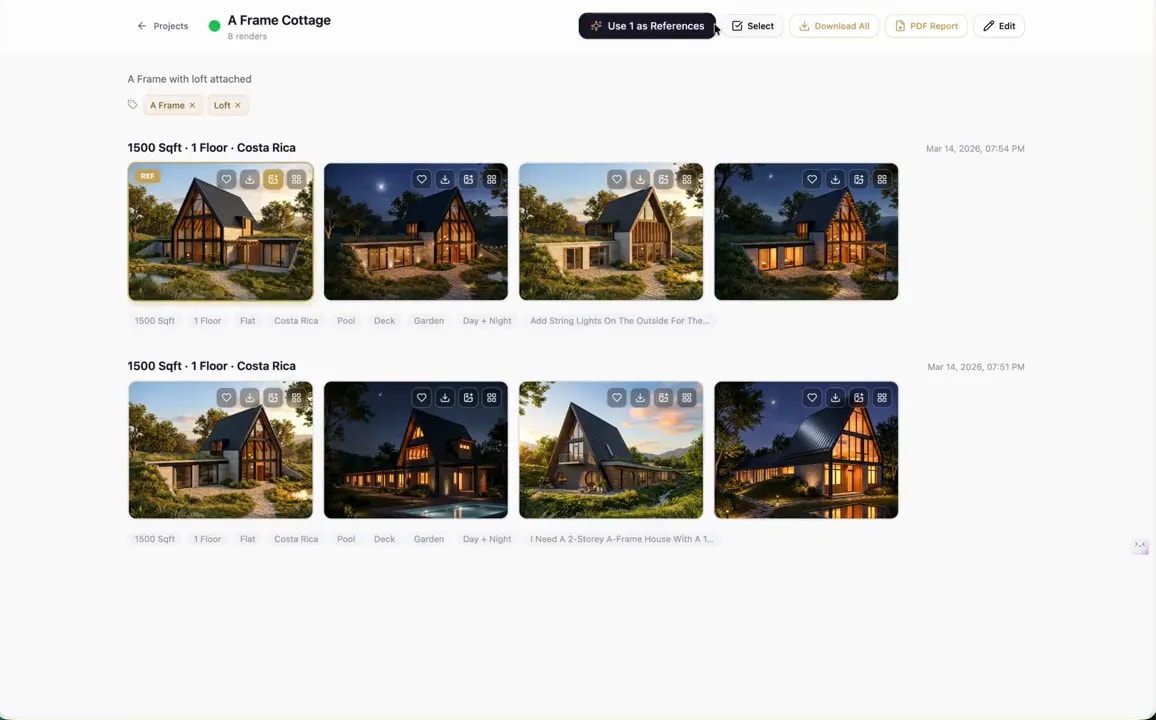
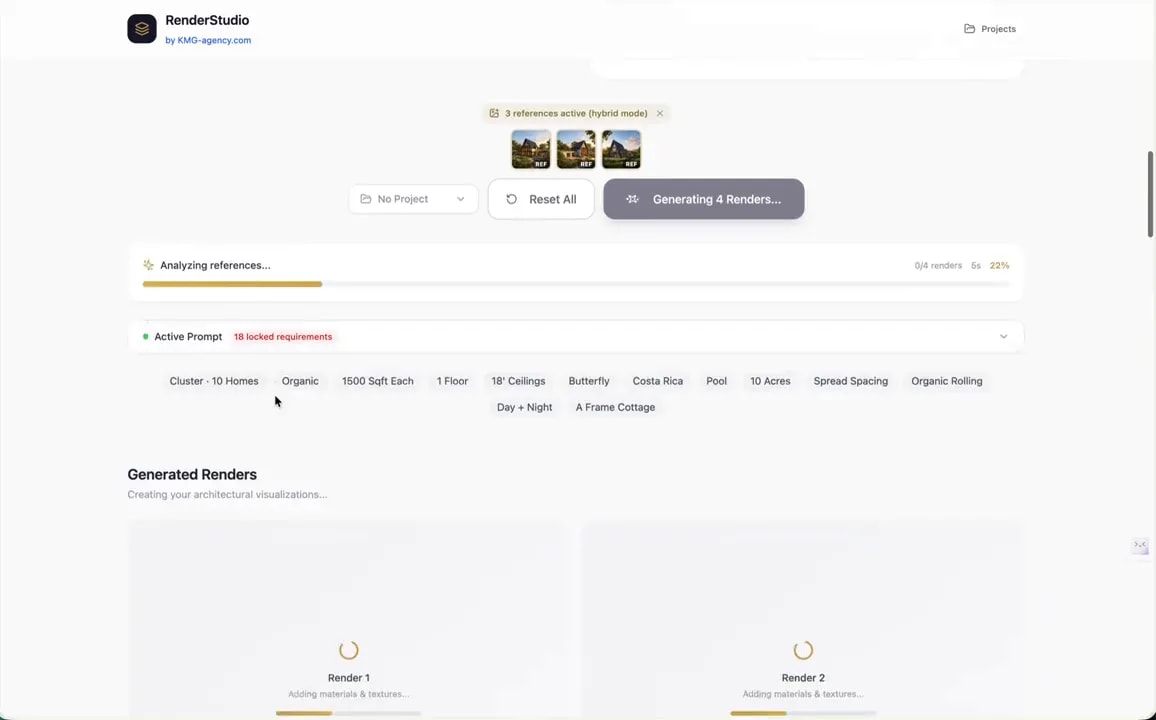
Then came the fun part. Instead of a single villa, I switched to a cluster concept. I used a set of A frame designs as references and asked the system to create a ten home village arrangement with an organic layout, a central clubhouse, a pool, a circular road, gate security, natural materials, and rolling terrain.
I also need to be honest about current limitations. I had already discussed one of them with the AI itself. It does not truly understand spacing the way a human planner or architect does. You can ask it to spread homes far apart across ten acres, but it still tends to bunch things more tightly than you would in a real site plan.
Even so, the cluster function is wildly useful for conceptual development. It can show the spirit of a village, the relationship between homes and amenities, and the atmosphere of a small community.
The generated village results
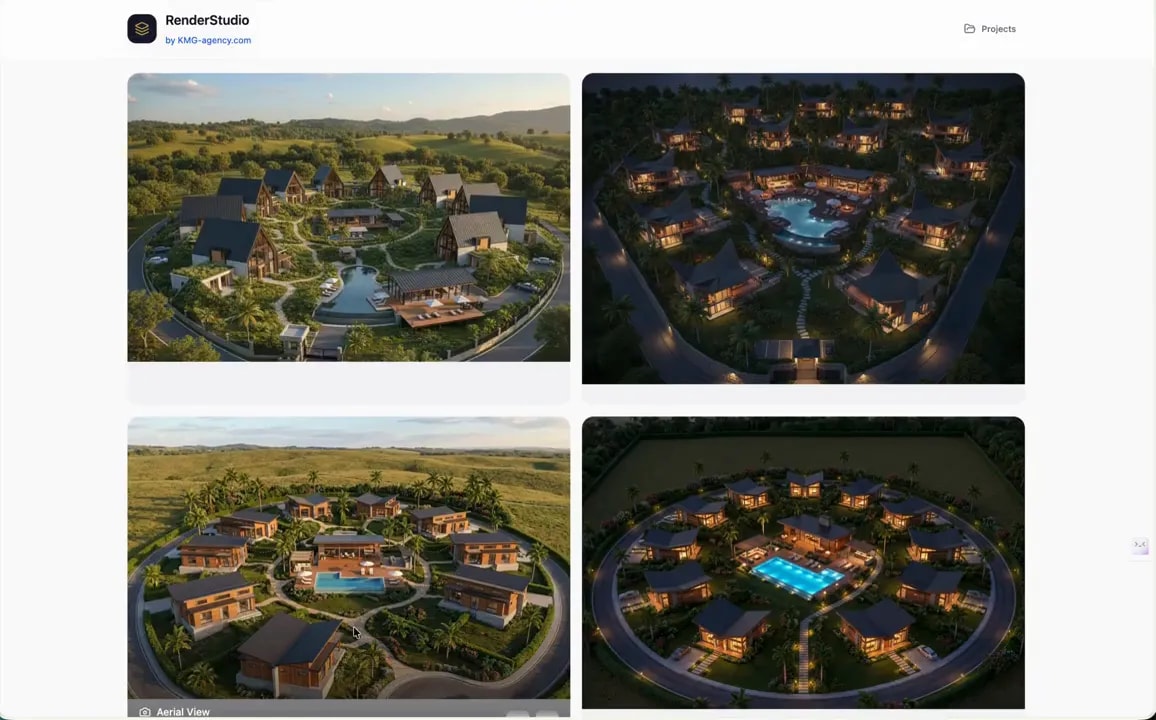
The finished cluster renders were impressive. The system produced multiple homes, a central pool and clubhouse, circulation roads, a gated entry, and a strong sense of community form. It did not perfectly honor every spacing request, but it did create a convincing village concept.
For a developer exploring boutique hospitality, branded residences, or a small investment community in Costa Rica Real Estate For Sale, that kind of output can quickly communicate the vision. It is not engineering. It is not permitting. It is not a final site plan. But it can absolutely help shape the conversation.
Where the tool shines and where it does not
What it does well:
- Turns plain floor plans into compelling visual concepts
- Allows rapid experimentation with style, roof forms, amenities, and mood
- Uses previous renders and project references to guide future outputs
- Generates both single home and multi home concepts
- Provides a quick directional cost estimate
What it does not replace:
- Architectural design development
- Site planning and topographical placement
- Structural, engineering, or permit documentation
- Exact adherence to every instruction in every generation
That distinction matters. In Costa Rica Real Estate For Sale, the best use case is concept acceleration. You use the tool to create options, clarify style, and communicate an idea. Then professionals take it into the real world.
The real lesson from this live experiment
The biggest takeaway is that RenderStudio works best as a conversation between you and the AI. You upload a plan. It interprets. You evaluate. You add references. It evolves. You tighten instructions. It gets closer. That back and forth is the workflow.
If you expect perfect obedience on the first attempt, you will be disappointed. If you treat it like a talented but unpredictable concept partner, you will get much more value out of it.
And for anyone operating in Costa Rica Real Estate For Sale, that value can be substantial. Whether the goal is a luxury villa, a rental concept, a residential cluster, or a development pitch, early visual clarity can change the quality of the whole process.
Final thoughts
AI rendering is getting better fast. What already feels impressive today will almost certainly look basic compared to where this goes next. Even now, though, the ability to start with a floor plan and come away with polished day and night visuals is a serious advantage.
For property marketing, land strategy, and early design thinking in Costa Rica Real Estate For Sale, that is a big deal. You can move quicker, test more ideas, and build a stronger visual narrative around a project before investing in the full production pipeline.
That is exactly the kind of tool I like building and using. Something practical. Something beautiful. Something that helps turn an idea into momentum.