

 by Joseph
Moving to Costa Rica from Canada in 2026 requires choosing the right legal residency path (Pensionado, Rentista, Inversionista, or Digital Nomad), severing primary Canadian residential ties to manage CRA non-residency and departure tax, establishing healthcare coverage through CCSS (Caja), and planning your cross-border money transfers and real estate purchase. Canadian citizens receive up to a 180-day tourist entry stamp upon arrival, providing ample time to explore Guanacaste, view homes, and finalize residency filings.
📋 Quick Answer: How to Move to Costa Rica from Canada (5 Key Steps)
- Select Your Residency Category: Choose between Pensionado ($1,000 USD/mo pension), Rentista ($2,500 USD/mo income), Inversionista ($150,000 USD real estate investment under Law 9996), or Digital Nomad ($3,000 USD/mo foreign remote income).
- Organize & Apostille Canadian Documents: Obtain RCMP criminal record checks, birth certificates, and marriage certificates, apostilled by Global Affairs Canada or provincial authorities, then translated into Spanish in Costa Rica.
- Manage CRA Non-Residency & Departure Tax: Sever primary residential ties (home, spouse, dependents) to establish non-resident tax status under Canada Revenue Agency (CRA) guidelines (ITA Section 128.1).
- Transition Health & Banking: Transition from provincial health coverage (OHIP, MSP, AHCIP, RAMQ) to Costa Rica’s CCSS (Caja) public system and private insurance; set up cross-border currency transfers (CAD to USD).
- Sell or Rent Canadian Real Estate & Buy in Costa Rica: Liquidate or lease your Canadian home, utilize Canada’s Principal Residence Exemption (PRE) tax-free, and acquire titled real estate in Guanacaste (Playa Lagarto, Nosara, Tamarindo).
12-Month Step-by-Step Moving Checklist for Canadians
Relocating from Toronto, Vancouver, Montreal, or Calgary to Costa Rica is a life-changing move. Following a structured timeline ensures you avoid tax surprises with the CRA and legal delays with Costa Rica’s immigration department (DGME).
12 to 6 Months Before Departure
- Consult a Cross-Border Tax Professional: Review CRA Income Tax Folio S5-F1-C1 regarding your Canadian residential ties, deemed disposition (departure tax), and TFSA/RRSP strategy.
- Select Your Destination: Visit Costa Rica to explore popular expat hubs in Guanacaste, such as Playa Lagarto, Nosara, Tamarindo, and Playas del Coco. Read our guide on how to relocate to Costa Rica to compare regions.
- Begin Document Collection: Request official RCMP fingerprint background checks and long-form birth certificates.
6 to 3 Months Before Departure
- Apostille Canadian Documents: Submit criminal checks and certificates to Global Affairs Canada or provincial official document services for apostille authentication under the Hague Convention.
- Decide on Canadian Real Estate: Sell your home to lock in tax-free capital gains under Canada’s Principal Residence Exemption (PRE), or hire a property manager if renting. Read our guide on buying property in Costa Rica as a foreigner.
- Book Flights: Secure direct or one-stop flights to Liberia International Airport (LIR) or San José (SJO).
3 Months to Arrival
- Notify Provincial Health Authorities: Contact OHIP (Ontario), MSP (BC), AHCIP (Alberta), or RAMQ (Quebec) regarding your departure date and temporary coverage extensions.
- Set Up Currency Transfers: Establish accounts with specialized foreign exchange providers (Wise, OFX, or bank wire desks) to convert CAD to USD at optimal exchange rates.
- Prepare Pet Travel: Obtain veterinary health certificates and CFIA endorsements within 14 days of travel, as required by SENASA Costa Rica.


Costa Rica Visa & Residency Options for Canadian Citizens
Canadian passport holders enter Costa Rica as tourists (Group 1) and are granted an entry stamp valid for up to 180 days (6 months) per DGME Resolution DG-0034-11-2023. To reside permanently, Canadians apply under four primary legal residency categories:
- Pensionado (Retiree Residency): Requires proof of a permanent guaranteed lifetime pension of at least $1,000 USD/month from government sources (CPP, OAS, provincial pensions) or approved private pension funds. Benefits under Law 9996 include duty-free import of household goods and up to two personal vehicles.
- Rentista (Income Earner Residency): Requires proof of a guaranteed unearned monthly income of at least $2,500 USD/month for 2 years ($60,000 USD total deposited into a Costa Rican bank or structured through a bank trust).
- Inversionista (Investor Residency): Requires a minimum investment of $150,000 USD in Costa Rica real estate, business equity, or registered assets under Law 9996 (reduced from the former $200,000 USD threshold). Buying a home or villa in Guanacaste qualifies directly.
- Digital Nomad Visa (Law 10008): Designed for remote workers earning at least $3,000 USD/month (or $4,000 USD/month for families) from non-Costa Rican employers or clients. Grants a 1-year renewable stay (up to 2 years total) with 100% exemption from Costa Rican income tax on foreign income.
Government Fees & Documentation: DGME filing fees are $50 USD plus $1.25 per page, with a $200 USD change-of-status fee if applying inside Costa Rica as a tourist. A refundable security deposit ($300–$500 USD) is required upon approval. All Canadian documents (RCMP background check, birth and marriage certificates) must be apostilled in Canada and translated into Spanish by an official Costa Rican translator.
CRA Non-Residency, Form NR73 & Departure Tax (Section 128.1)
Understanding Canada Revenue Agency (CRA) tax rules is essential when moving abroad. Canada taxes based on residency, not citizenship. To stop paying Canadian income tax on worldwide earnings, you must legally sever your residential ties with Canada per CRA Income Tax Folio S5-F1-C1.
Severing Primary vs Secondary Residential Ties
Primary Ties: Selling or leasing your Canadian dwelling, and having your spouse/partner or dependents relocate with you. Keeping a home available for your immediate personal use in Canada is the #1 reason CRA deems an individual a Canadian resident.
Secondary Ties: Surrendering your provincial driver’s license, cancelling provincial health coverage, closing non-essential bank accounts, and disposing of personal property (cars, furniture) in Canada.
Form NR73: Determination of Residency Status
CRA Form NR73 allows taxpayers to request an opinion on their non-resident status. However, Canadian cross-border tax specialists frequently advise against filing Form NR73 unnecessarily. Filing NR73 invites formal CRA review and is not legally mandatory if your residential ties are clearly severed upon departure.
Departure Tax (Deemed Disposition under ITA Section 128.1)
Under Section 128.1 of the Income Tax Act, the day you cease Canadian tax residency, CRA deems you to have disposed of worldwide capital assets at Fair Market Value (FMV). This triggers capital gains tax on non-registered stock portfolios, foreign real estate, and private company shares.
Exempt Assets: Canadian real property (your Canadian house/condo), RRSPs, RRIFs, TFSAs, and RESPs are exempt from immediate departure tax. However, TFSAs lose their tax-free growth benefit under foreign tax regimes once you become a non-resident.


Provincial Health Coverage vs Costa Rica CCSS (Caja) System
Canadians moving to Costa Rica must manage two healthcare transitions: ending provincial health insurance coverage and enrolling in Costa Rica’s public healthcare system.
Losing Provincial Health Coverage (OHIP, MSP, AHCIP, RAMQ)
Provincial healthcare plans require physical presence in your home province for at least 182 to 212 days (approx. 6 months) per 12-month period to maintain coverage:
- Ontario (OHIP): Requires presence in Ontario for 153 days in any 12-month period. Ontario permits a extended absence exemption (up to 2 years) for extended travel if approved before leaving.
- British Columbia (MSP): Requires physical presence for 6 months in a calendar year.
- Alberta (AHCIP) & Quebec (RAMQ): Require 183 days of physical presence per calendar year.
Enrolling in Costa Rica’s CCSS (Caja) System
Enrolling in the Caja Costarricense de Seguro Social (CCSS) is mandatory for all temporary residents (Pensionado, Rentista, Inversionista) before receiving an official DIMEX residency card. Monthly contributions are calculated on a sliding scale based on declared monthly income (typically 7% to 15% of reported income, with a minimum contribution of ~$70–$150 USD/month).
Private Healthcare Option: Many Canadian expats supplement CCSS with private health insurance or out-of-pocket care at world-class hospitals in San José and Guanacaste (Hospital CIMA, Hospital Bíblica, Hospital Metropolitano). Doctor consultations range from $50 to $150 USD.
CPP & OAS Pensions for Canadian Non-Residents
Retiring in Costa Rica does not mean giving up earned Canadian retirement benefits:
- Canada Pension Plan (CPP): CPP payments can be paid to beneficiaries living anywhere in the world, regardless of how long you resided in Canada.
- Old Age Security (OAS): OAS pension is payable outside Canada only if you resided in Canada for at least 20 years after turning age 18. If you lived in Canada for fewer than 20 years, OAS payments stop after 6 consecutive months abroad.
- CRA Non-Resident Withholding Tax (Part XIII Tax): CRA automatically deducts a default 25% non-resident withholding tax from CPP and OAS pension payments sent to non-residents in Costa Rica. Tax treaties or filing a Section 217 return may help reduce or recover portion of this tax.

Banking & Cross-Border Money Transfers (CAD to USD)
Under SUGEF Anti-Money Laundering Regulations, opening a traditional bank account in Costa Rica as a tourist is strictly restricted. However, Canadians have straightforward banking paths once residency is underway:
- Opening Accounts as Residents: Once you receive your DIMEX card (or submission receipt), state banks (Banco Nacional, Banco de Costa Rica) and private banks (BAC Credomatic) allow full account opening with proof of income (Canadian tax return or CPA letter).
- Real Estate Escrow Accounts: When purchasing property prior to obtaining residency, real estate transactions are handled through SUGEF-registered escrow companies (e.g., Secure Title, Premier Title). Funds are wired directly from your Canadian bank to escrow.
- Currency Management: Property transactions and major expenses in Costa Rica are priced in US Dollars (USD). Utilizing institutional FX brokers or transfer services (Wise, OFX) saves 1.5% to 3% compared to retail Canadian bank wire exchange rates.
Flights from Toronto, Montreal, Calgary & Vancouver
Reaching Guanacaste from major Canadian gateways is fast and direct. Most Canadian expats target Liberia International Airport (LIR), located just 1 hour from Guanacaste’s top coastal communities:
- Toronto (YYZ): Year-round non-stop flights to Liberia (LIR) and San José (SJO) via Air Canada and WestJet (flight time ~5 hours 30 mins).
- Montreal (YUL): Direct non-stop seasonal flights to LIR via Air Transat and Air Canada.
- Calgary (YYC) & Vancouver (YVR): Non-stop seasonal flights via WestJet to LIR, alongside easy 1-stop connections through Houston (IAH), Dallas (DFW), or Atlanta (ATL).

Cost of Living in Costa Rica vs Toronto
Compared to Toronto or Vancouver, living in Guanacaste offers substantial savings on major expense categories, particularly housing and property taxes. While imported North American food items and vehicles carry high Costa Rican tariffs, fresh local food, domestic help, eating out, and home maintenance are markedly lower.
For a detailed breakdown of monthly budgets, rent prices, and grocery comparisons, check out our full Costa Rica Cost of Living Comparison vs Toronto guide.
Selling Your Canadian Home First: Principal Residence Exemption
If you own real estate in Toronto, Vancouver, Calgary, or Ottawa, selling your property before establishing non-residency is a strategic financial step:
- Tax-Free Principal Residence Exemption (PRE): Under CRA rules, capital gains realized on the sale of your primary Canadian residence while you are a Canadian resident are 100% tax-free.
- Avoiding Non-Resident Real Estate Complications: Selling your home after becoming a non-resident triggers complex CRA non-resident tax withholding requirements under Section 116 of the Income Tax Act.
- Deploying Capital to Costa Rica: Liquidating Canadian home equity gives you cash reserves to purchase a Guanacaste villa or home outright, avoiding costly foreign mortgage financing.
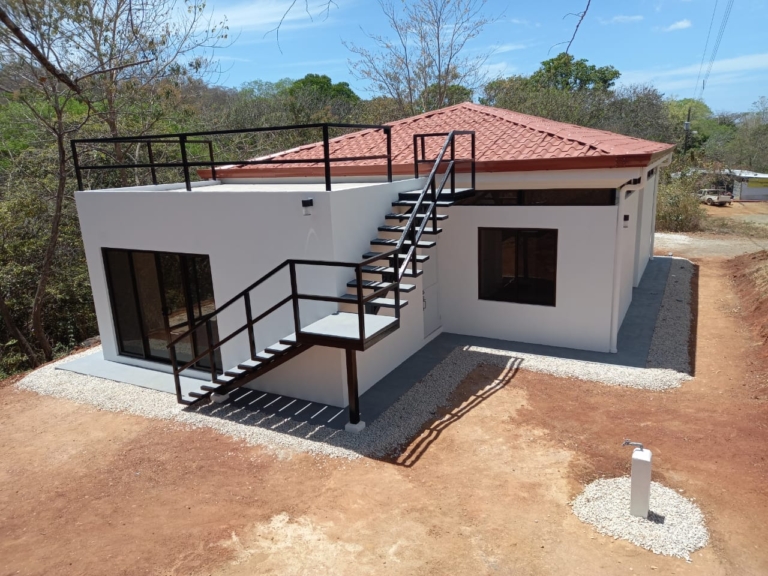
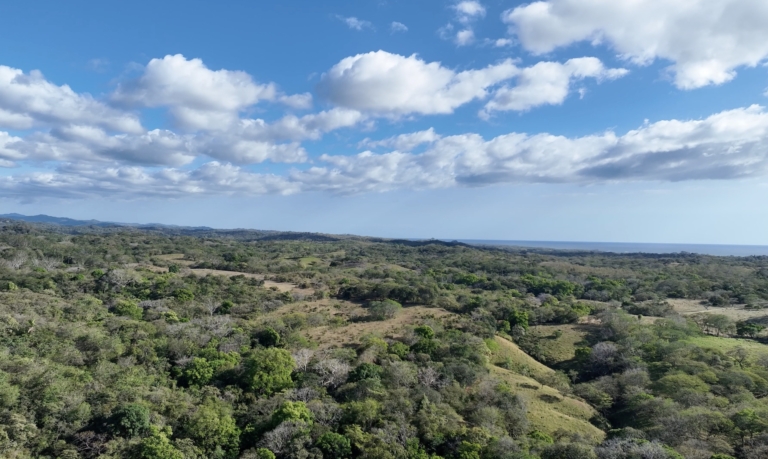
Homes for sale that Canadians are buying now
Real listings I have today in Guanacaste. Tap any photo for prices, photos and floor plans.

Buying Property in Costa Rica as a Canadian
Under Article 45 of the Costa Rican Constitution, foreign citizens enjoy the exact same property ownership rights as Costa Rican nationals. You can buy and own fee simple titled real estate 100% in your own name or through a Costa Rican corporation (S.A. or S.R.L.).
- Low Annual Property Tax: Municipal property tax in Costa Rica is extraordinarily low at just 0.25% per year of the registered municipal value ($750 USD/year on a $300,000 USD home).
- Closing Costs: Closing costs average 3.5% to 4% of the purchase price, covering property transfer tax (1.5%), national registry fees, notary, and escrow fees.
- Inversionista Residency Eligibility: Purchasing titled property valued at $150,000 USD or more qualifies you and your family for Inversionista legal residency under Law 9996.
To explore available gated community villas, beach homes, and lot inventory in Guanacaste, browse our Costa Rica real estate listings and read our complete Costa Rica Buyers Guide.
🏡 Thinking of Buying Property in Costa Rica?
Whether you are searching for a gated community villa in Playa Lagarto, an ocean-view home in Nosara, or a rental income condo in Tamarindo, Yossi Kaplan, MBA provides expert buyer representation tailored to Canadian and American clients.
More listings worth a look
Villas, ocean-view land and surf-town lots.
Frequently Asked Questions: Moving to Costa Rica from Canada
Can Canadians move to Costa Rica permanently?
Yes. Canadians can move to Costa Rica permanently by applying for temporary residency under the Pensionado, Rentista, Inversionista, or Digital Nomad programs. After 3 years of temporary residency, you become eligible for permanent residency, allowing you to work locally in Costa Rica.
Do Canadians need a visa to enter Costa Rica?
Canadian passport holders do not need a pre-arranged visa to enter Costa Rica as tourists. Border officers grant an entry stamp valid for up to 180 days. You must show proof of onward travel departing Costa Rica within 180 days.
Will I lose my Canadian healthcare (OHIP, MSP, AHCIP) when I move?
Yes. Canadian provincial health plans require physical presence in your home province for 182 to 212 days per year. Once you move permanently, coverage lapses. In Costa Rica, legal residents enroll in the mandatory CCSS (Caja) public health system and can utilize private healthcare clinics.
How does CRA Departure Tax work when moving to Costa Rica?
Under ITA Section 128.1, when you cease Canadian tax residency, CRA deems you to have sold all worldwide capital assets at Fair Market Value on departure day, triggering capital gains tax on non-registered stocks and investments. Canadian real estate and RRSPs are exempt from immediate departure tax.
Can Canadians buy real estate in Costa Rica?
Yes. Foreigners enjoy the exact same constitutional real estate ownership rights as Costa Rican citizens. You can buy fee simple titled property 100% in your own name. Purchasing property valued at $150,000 USD or more qualifies you for Inversionista legal residency under Law 9996.
Can I receive my CPP and OAS payments while living in Costa Rica?
Yes. CPP is paid worldwide regardless of where you live. OAS is paid abroad if you lived in Canada for at least 20 years after turning age 18. CRA automatically withhold 25% non-resident Part XIII tax from pension payments sent to Costa Rica.