 by
⚡ Quick Answer: Buying Costa Rica Real Estate as a Foreigner
- Equal Ownership Rights: Foreigners (Canadians, Americans, and all nationalities) have the exact same fee-simple property ownership rights as Costa Rican citizens, constitutional guaranteed under Article 19.
- Residency Required?: No. You can buy property on a standard tourist visa without legal residency. Purchasing $150,000 USD+ in real estate also qualifies you for Investor Residency (Inversionista).
- Closing Costs: Typically 3.5% to 4.0% of purchase price (1.5% transfer tax, ~0.82%-1.0% registry fees, 1.0%-1.5% legal fees + 13% VAT, 0.25%-0.50% escrow). Usually split 50/50 between buyer and seller.
- Annual Property Taxes: 0.25% municipal property tax. Residential properties with luxury construction values over ₡143,000,000 CRC (~$280,000 USD in 2026) pay an additional Luxury Home Tax (0.25%–0.55%).
- Financing: Local mortgages are unavailable to non-residents. Most buyers pay cash, refi home-country equity (HELOC), or negotiate seller financing.
Can Canadians and Americans Buy Property in Costa Rica?
Yes. Under Article 19 of the Constitution of Costa Rica, foreign nationals enjoy equal rights to purchase, hold, and sell real estate, with full fee-simple title rights (finca) registered in the National Registry (Registro Nacional). You do not need Costa Rican residency or a local partner to own titled land in your own name or through a Costa Rican corporation.
If you are relocating or investing from North America, explore our comprehensive relocation resources: read our main Costa Rica Relocation Guide, as well as our country-specific checklists for Canadians Moving to Costa Rica and Americans Moving to Costa Rica.
1. Ownership Rights: Fee Simple vs. Maritime Concession (ZMT)
Over 95% of Costa Rican real estate is fee-simple titled property, granting complete ownership rights identical to the US or Canada. The major exception is beachfront concession property governed by the Maritime Terrestrial Zone Law (Ley 6043 – ZMT):
- Public Zone (First 50 meters from mean high tide): Public domain, completely unbuildable and non-ownable.
- Restricted Concession Zone (Next 150 meters): Leasehold concession land granted by local municipalities. Non-resident foreigners cannot own more than 49% of shares in a corporation holding concession land; 51%+ must be held by Costa Rican citizens or residents with 5+ years of legal residency.
2. Title Search & Due Diligence (Registro Nacional)
Every titled property in Costa Rica possesses a unique Folio Real number recorded in the public Registro Nacional database. Before signing a final deed or releasing funds, your local attorney performs a formal title search to verify:
- Clear ownership chain and lack of unresolved ownership disputes.
- Absence of mortgages, liens, tax executions, or court attachments (embargos).
- Registered boundary surveys (plano catastrado) matching physical property lines.
- Water rights confirmation (ASADA water letter or registered water well permit) and electrical connection access.
3. SUGEF-Regulated Escrow Accounts
Under Costa Rican anti-money laundering legislation monitored by SUGEF (Superintendencia General de Entidades Financieras), earnest money deposits and closing funds must be held by a licensed, independent escrow company (such as Secure Title or PrimAM). Foreign buyers must provide proof of source of funds, including tax returns, bank statements, or proof of asset sale from Canada or the USA.
4. Closing Costs and Property Transfer Taxes
Real estate closing costs in Costa Rica generally total between 3.5% and 4.0% of the purchase price (or registered fiscal value, whichever is higher). Breakdown mandated by law:
- Property Transfer Tax (Impuesto de Traspaso): 1.5% paid to the Ministerio de Hacienda.
- National Registry Stamps & Fees: ~0.82% to 1.0% (fiscal stamps, legal stamps, registry fees).
- Notary / Attorney Legal Fee: 1.0% to 1.5% + 13% VAT on legal services.
- SUGEF Escrow Account Fee: 0.25% to 0.50% ($500–$1,500 typical minimum).
By local custom, closing costs are divided 50/50 between buyer and seller unless negotiated otherwise in the purchase agreement.
5. Annual Municipal Property Tax & Luxury Home Tax
Holding real estate in Costa Rica carries very low annual carrying costs compared to North America:
- Municipal Property Tax (Impuesto Territorial – Law 7509): Standard rate of 0.25% per year based on the registered municipal value. On a $400,000 USD home, municipal tax is just $1,000 USD per year.
- Luxury Home Tax (Impuesto Solidario – Law 8683 / Executive Decree 45358-H): Applies only to residential dwellings where construction replacement value exceeds ₡143,000,000 CRC for 2026 (~$280,000 USD). The tax is calculated on a progressive scale from 0.25% to 0.55% of the total property value (land + construction).
6. Financing Realities for Foreign Buyers
Costa Rican commercial and state banks do not offer traditional mortgages to non-resident foreign buyers. North American buyers fund real estate purchases through three primary methods:
- All-Cash / Equity Liquidation: Utilizing personal savings, investment proceeds, or cash-out refinances / HELOCs secured against primary real estate in Canada or the US.
- Seller Financing: Many expat sellers offer short-term financing (typically 2 to 5 year terms, 30% to 50% down payment, at 7% to 10% interest) secured by a local mortgage or trust structure (fideicomiso).
- Self-Directed IRAs / RRSPs: American buyers can use Self-Directed IRAs or Checkbook LLCs, while Canadian buyers can utilize specific corporate structures to purchase investment real estate.
For current pricing trends across Guanacaste, see our analysis of the Costa Rica Real Estate Market & Home Prices.
7. Buying Property Through a Costa Rican Corporation (S.A. or S.R.L.)
While foreigners can buy in their personal name, many choose to set up a Costa Rican corporate entity—either a Sociedad Anónima (S.A.) or a Sociedad de Responsabilidad Limitada (S.R.L. / LLC):
- Key Benefits: Simplified multi-owner estate planning, isolation of personal liability, streamlined utility and rental account management.
- Corporate Obligations: Corporate entities require an annual corporate tax (~$120–$230 USD), annual Resident Agent legal fee (~$300–$500 USD), and mandatory annual registration in the Transparency and Final Beneficiaries Register (RTBF / Registro de Transparencia y Beneficiarios Finales).
8. Remote Buying & Power of Attorney (Poder Especial)
You do not need to be physically present in Costa Rica to close on a property. You can execute a Special Power of Attorney (Poder Especial) authorizing your closing attorney or trusted representative to sign the public deed (escritura pública) on your behalf. POA documents signed abroad must be notarized and authenticated via an international Apostille (or through a Costa Rican consulate).
Step-by-Step Property Buying Process in Costa Rica
- Step 1: Define Your Goal & Explore Neighborhoods: Identify whether you want a vacation rental villa, modern container home, or luxury residence in coastal Guanacaste (Playa Lagarto, Nosara, Tamarindo). View active listings on our Costa Rica Property Catalog.
- Step 2: Submit a Formal Purchase Offer (Option to Purchase): Your agent and attorney draft an Option to Purchase Contract (Contrato de Promesa de Compraventa) outlining purchase price, deposit terms, due diligence contingency periods, and closing timeline.
- Step 3: Deposit Earnest Money into SUGEF Escrow: Deposit the initial earnest money (typically 10% of purchase price) into a regulated escrow account upon seller acceptance.
- Step 4: Conduct Attorney Due Diligence: Over a 15- to 30-day window, your notary attorney inspects the Folio Real, survey map (plano catastrado), municipal tax receipts, water availability letter (ASADA), and building permits.
- Step 5: Wire Final Closing Funds: Wire the remaining balance and closing fees to escrow 3 to 5 business days prior to the closing date.
- Step 6: Sign the Public Closing Deed (Escritura Pública): Both parties (or their POA representatives) sign the public transfer deed before a Costa Rican Notary Public.
- Step 7: Final Registration at the Registro Nacional: Your notary submits the deed to the National Registry. Title registration is formally updated within 10 to 20 business days.
📥 Get the Free Moving to Costa Rica Checklist (2026 PDF)
Download our instant 2026 planning guide: 12-month timeline, residency tables, CRA/IRS tax checklists, Guanacaste cost of living, and home buying steps.
Costa Rica homes and villas attract buyers for a simple reason: they combine tropical living, strong vacation appeal, and a wide range of property styles. From compact container homes to rental-focused Airbnb units and large luxury villas, the market includes options for very different budgets and goals.
If you are comparing costa rica homes and villas, the most useful starting point is not price alone. It is understanding which property type fits your intended use, what amenities matter most, and how location and design affect long-term value.
What kinds of Costa Rica homes and villas are most common?
Based on the property styles shown in the source material, three broad categories stand out:
- Container homes with modern lines and compact footprints
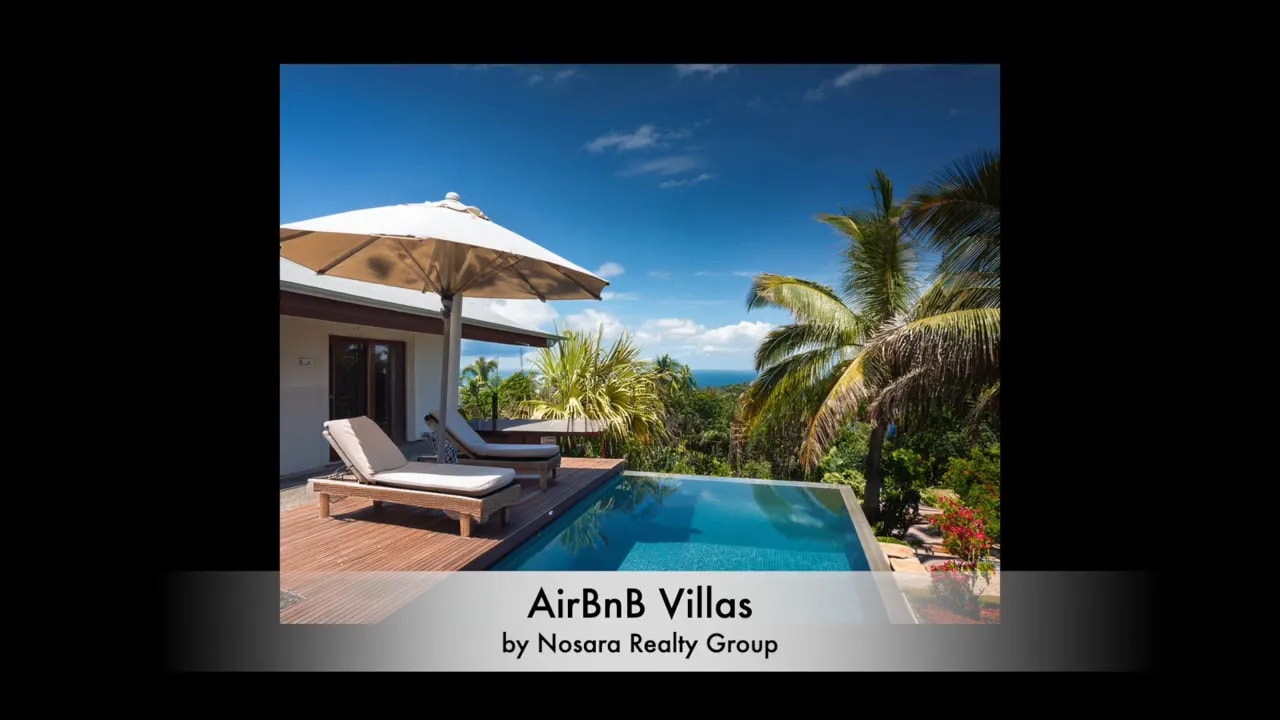
- Airbnb-style villas designed for short stays, pool access, and outdoor living
- Luxury designer homes with larger layouts, dramatic views, and premium finishes
These categories often overlap. A modern container home may also work as a vacation rental, and some high-end villas are built specifically for short-term guest demand. Still, each type usually serves a different buyer profile.
Why costa rica homes and villas are so appealing
The strongest appeal of costa rica homes and villas is the lifestyle package they offer. The examples shown consistently emphasize:
- Ocean or jungle-adjacent settings
- Outdoor decks and terraces
- Private pools
- Open indoor-outdoor layouts
- Strong natural light and view orientation
In practical terms, this means buyers are often choosing not just a house, but a way of living. The outdoor space may matter as much as the interior square footage. A rooftop deck, plunge pool, shaded lounge area, or sunset-facing terrace can be central to the property’s value.
Container homes in Costa Rica: who they are best for
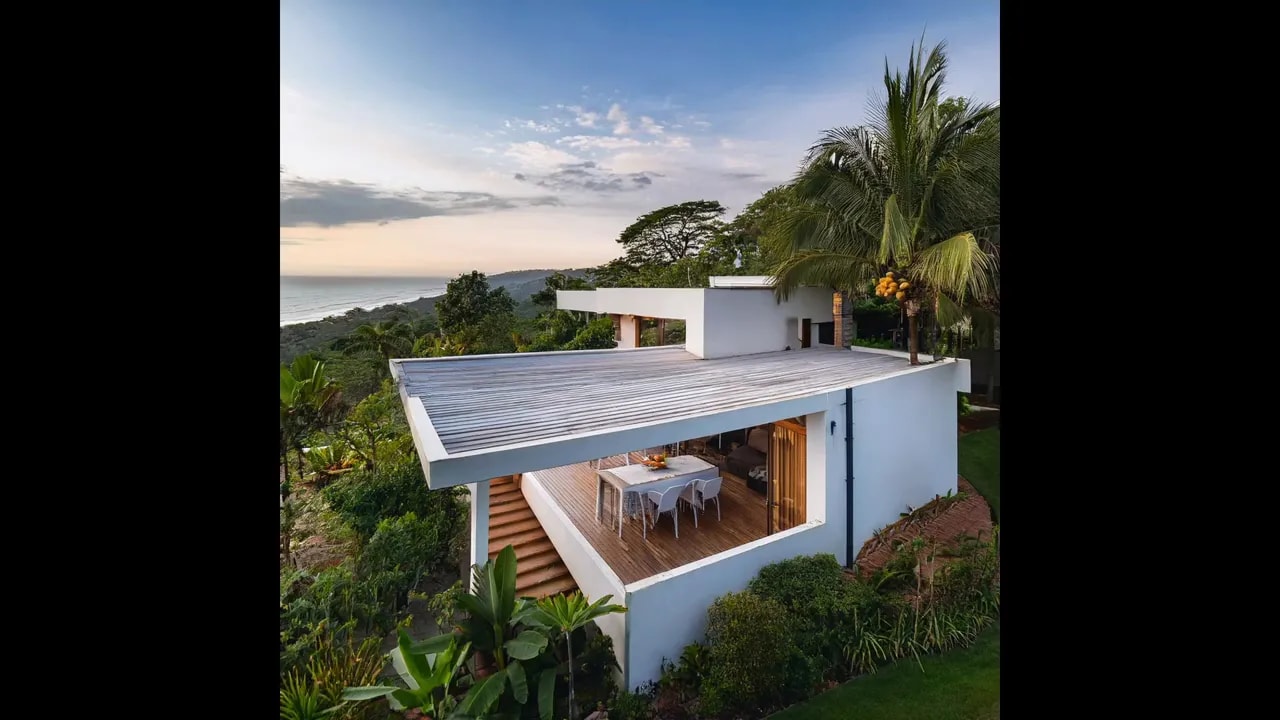
Container homes are one of the more distinctive options within costa rica homes and villas. They usually feature a clean, modern aesthetic with boxy forms, compact planning, and strong connection to outdoor living areas.
Typical features of container homes
- Rectilinear design
- Smaller to mid-sized footprints
- Wraparound decks or pool terraces
- Large glass openings
- Strong visual appeal for contemporary buyers and guests
Why buyers consider them
Container homes can appeal to buyers who want:
- A modern tropical design language
- A property that stands out in rental listings
- A simpler layout than a large estate home
- A lower-maintenance footprint than a sprawling villa
What to evaluate carefully
If you are exploring container-style costa rica homes and villas, pay close attention to:
- Heat management and ventilation
- Shading over windows, decks, and outdoor seating
- Waterproofing in the tropical climate
- Practical livability beyond the visual concept
A container home can photograph beautifully, but success depends on comfort, airflow, privacy, and layout efficiency.
Airbnb villas: built for short stays and strong guest appeal
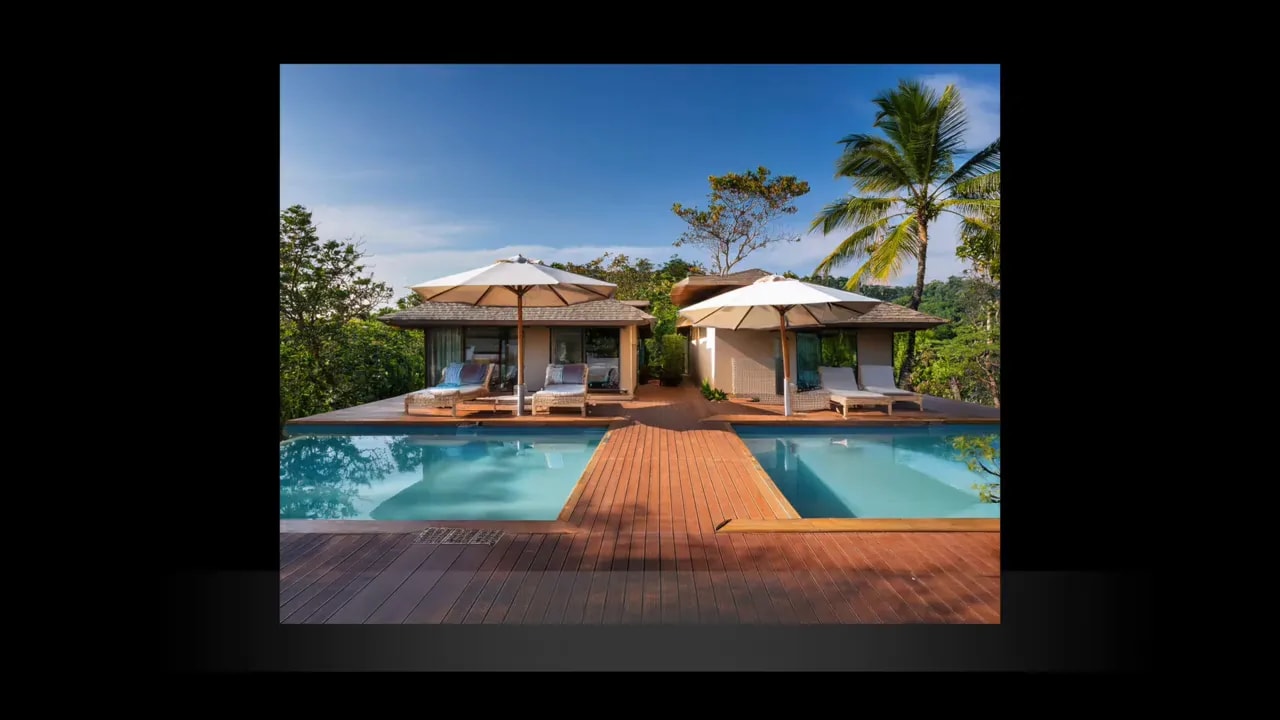
Among costa rica homes and villas, Airbnb-oriented villas are especially attractive to buyers focused on vacation use or rental income potential. The homes shown in this category prioritize relaxation, privacy, and immediate visual appeal.
Common design traits
- Private pools close to the main living area
- Covered outdoor seating
- Tropical landscaping
- Compact but attractive layouts
- Strong connection between bedrooms, terraces, and water features
These homes are often designed around the guest experience. Rather than maximizing room count alone, they focus on what makes a stay memorable: pool access, lounge space, sunset views, and resort-like atmosphere.
What makes an Airbnb villa more competitive?
For short-term rentals, the most valuable features tend to be:
- Photogenic architecture
- Private outdoor space
- Easy pool access
- Visible tropical setting
- A sense of seclusion
Buyers interested in rental performance should look at the property through a guest-first lens. Ask whether the home creates an instant sense of arrival and whether each main space contributes to that experience.
Luxury villas: larger layouts, higher design standards, premium views
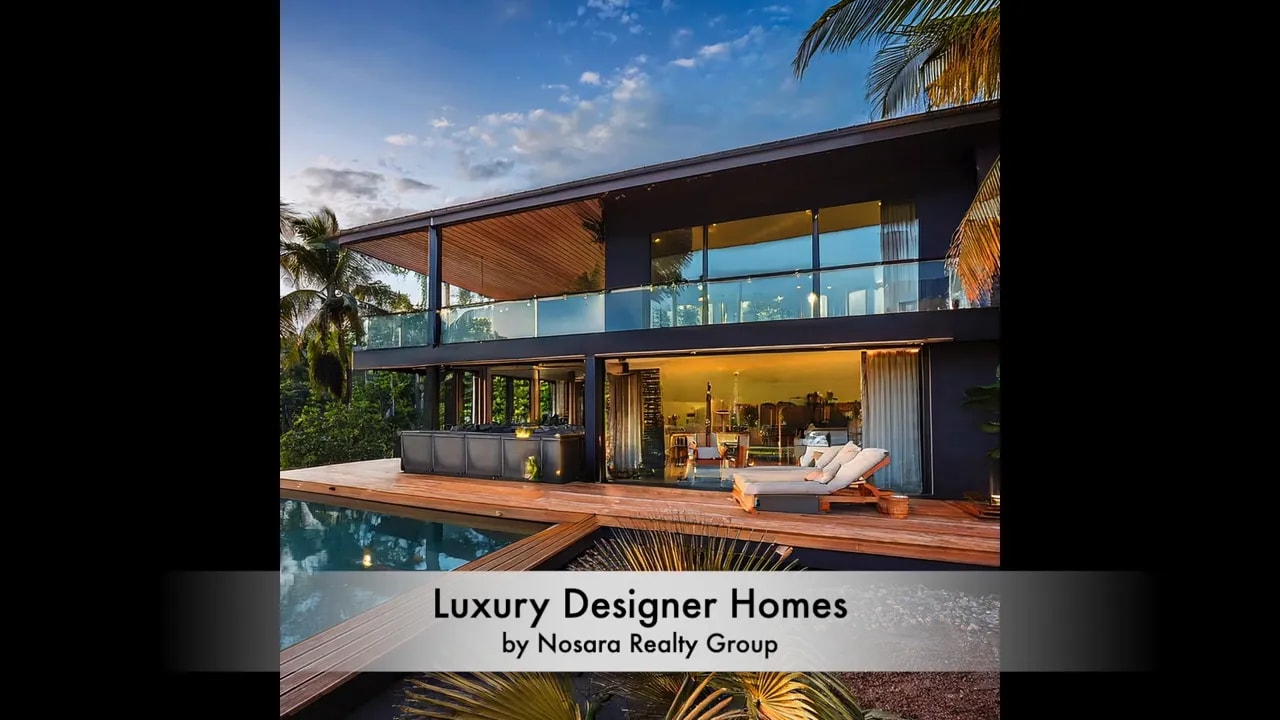
Luxury-focused costa rica homes and villas tend to emphasize scale, glass-heavy architecture, expansive terraces, and elevated siting. These homes are often designed to showcase views and create a seamless transition between interior living and exterior entertaining.
What sets luxury villas apart
- Multiple levels or large open spans
- Infinity-edge or elongated pools
- Large cantilevered decks
- Floor-to-ceiling glazing
- Broader entertaining areas
In this segment, design quality matters as much as size. A well-positioned terrace, protected outdoor dining area, and strong view corridor can be more important than simply adding more rooms.
Who usually shops this category?
Luxury costa rica homes and villas often appeal to buyers seeking one or more of the following:
- A primary residence in a tropical setting
- A second home with premium entertaining space
- A flagship vacation property
- A high-end rental asset with strong visual differentiation
Key features to compare when shopping costa rica homes and villas
Property photos can make many homes look similar at first glance. To compare effectively, focus on the features that shape real use and long-term satisfaction.
1. Pool design and placement
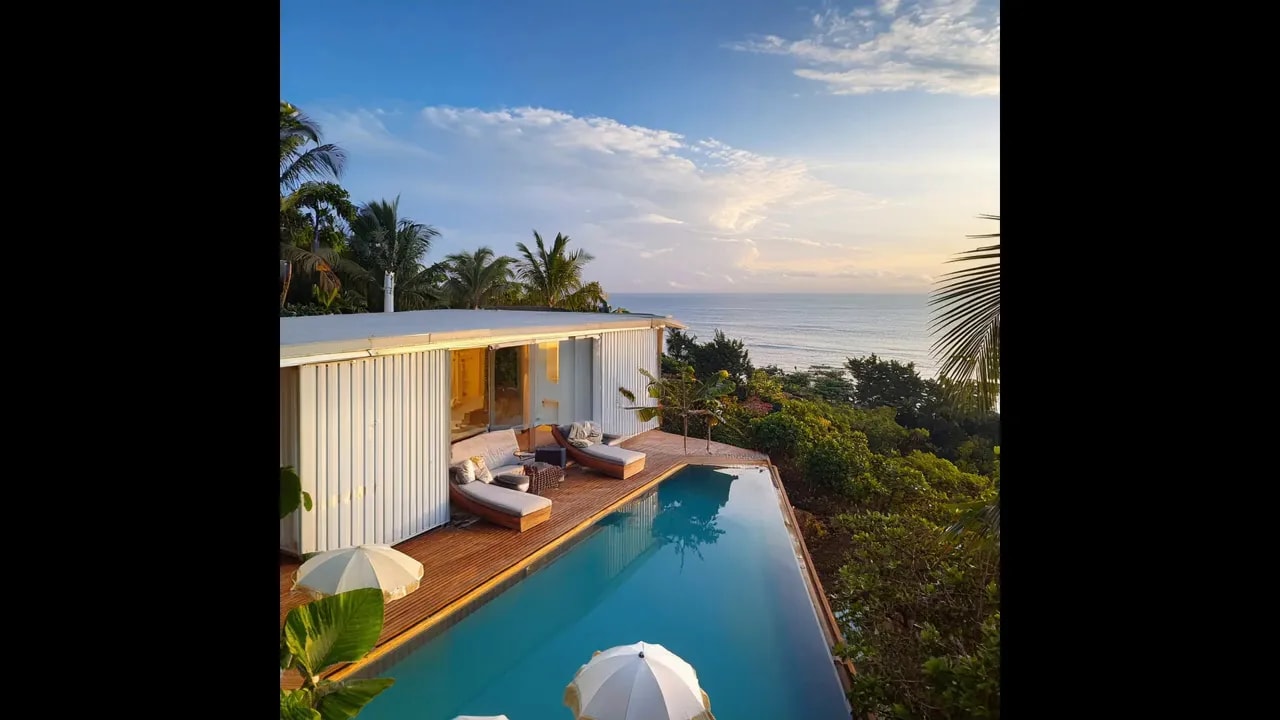
Many costa rica homes and villas center the lifestyle around the pool. Compare:
- Infinity edge versus standard pool
- Shade versus full sun exposure
- Distance from living room and kitchen
- Privacy from neighboring properties
- Ease of maintenance
2. Outdoor living space
Look beyond the number of bedrooms. A strong outdoor setup often includes:
- Lounging area
- Dining space
- Covered terrace
- Sun deck
- View-oriented seating
In tropical property markets, this can be one of the biggest quality-of-life factors.
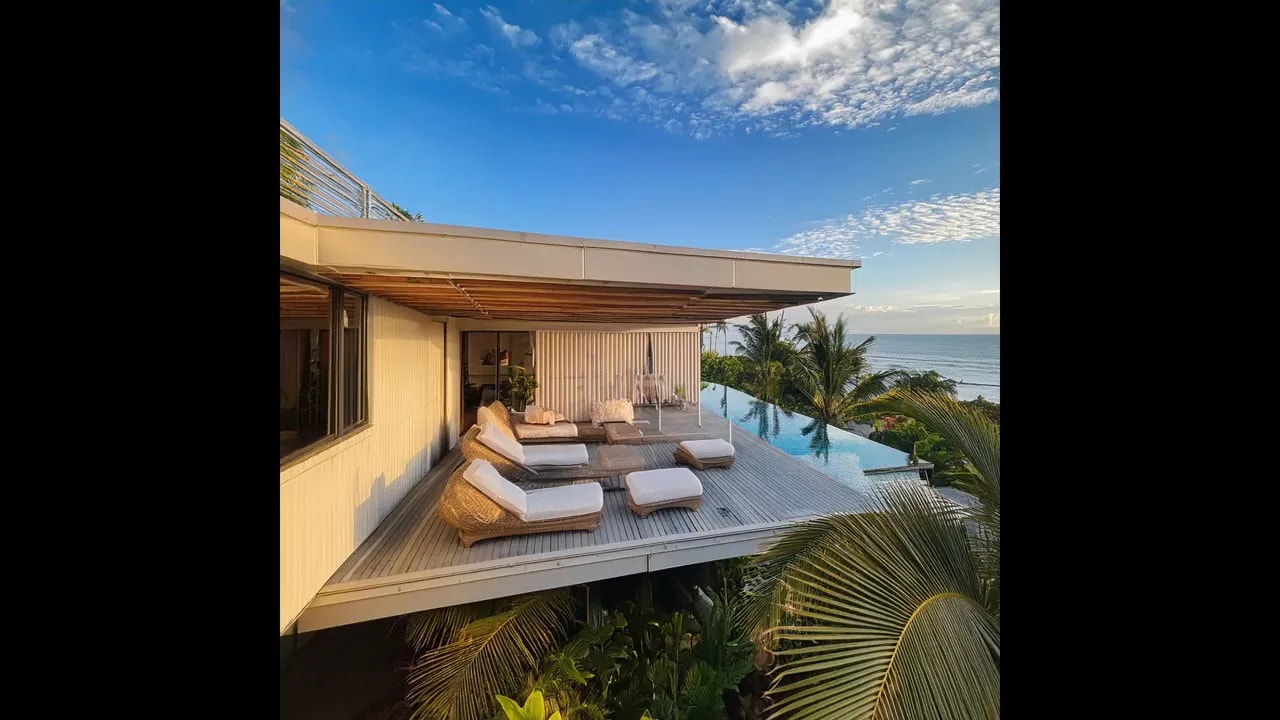
3. View orientation
Not all ocean-adjacent homes deliver the same experience. Some frame wide water views, while others are more immersed in greenery. Think about what matters more to you:
- Direct ocean panorama
- Sunset-facing deck
- Jungle privacy
- Elevated overlook
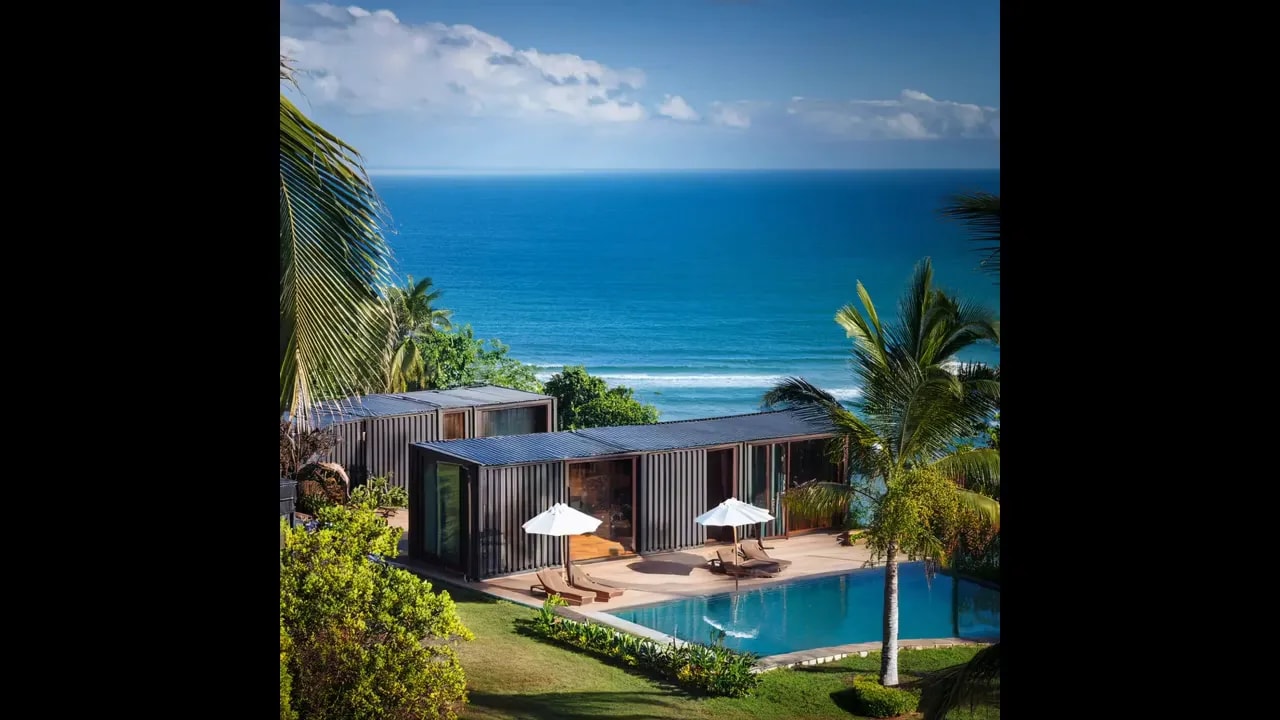
4. Architectural style
The style of costa rica homes and villas ranges from minimalist white volumes to darker contemporary structures and tropical pavilion designs. Style matters for both personal enjoyment and market positioning.
A modern, sharply designed home may attract one type of buyer or guest, while a softer tropical villa with thatched details may appeal to another.
5. Layout efficiency
Ask how the house actually lives day to day:
- Are bedrooms separated for privacy?
- Does the main living space connect naturally to the terrace?
- Are outdoor routes sheltered during rain?
- Do upper decks add usable value or just visual impact?
How to choose between container homes, Airbnb villas, and luxury villas
If you are narrowing down costa rica homes and villas, this simple framework can help.
Choose a container home if you want:
- Contemporary design with a smaller overall footprint
- A distinctive aesthetic
- A property that can stand out visually in listings
- A more compact ownership experience
Choose an Airbnb villa if you want:
- A vacation-focused property
- Strong short-stay appeal
- Pool-centered outdoor living
- A layout geared toward guest comfort and leisure
Choose a luxury villa if you want:
- More space and presence
- Premium design details
- Large terraces and entertaining areas
- A top-tier residence or prestige rental property
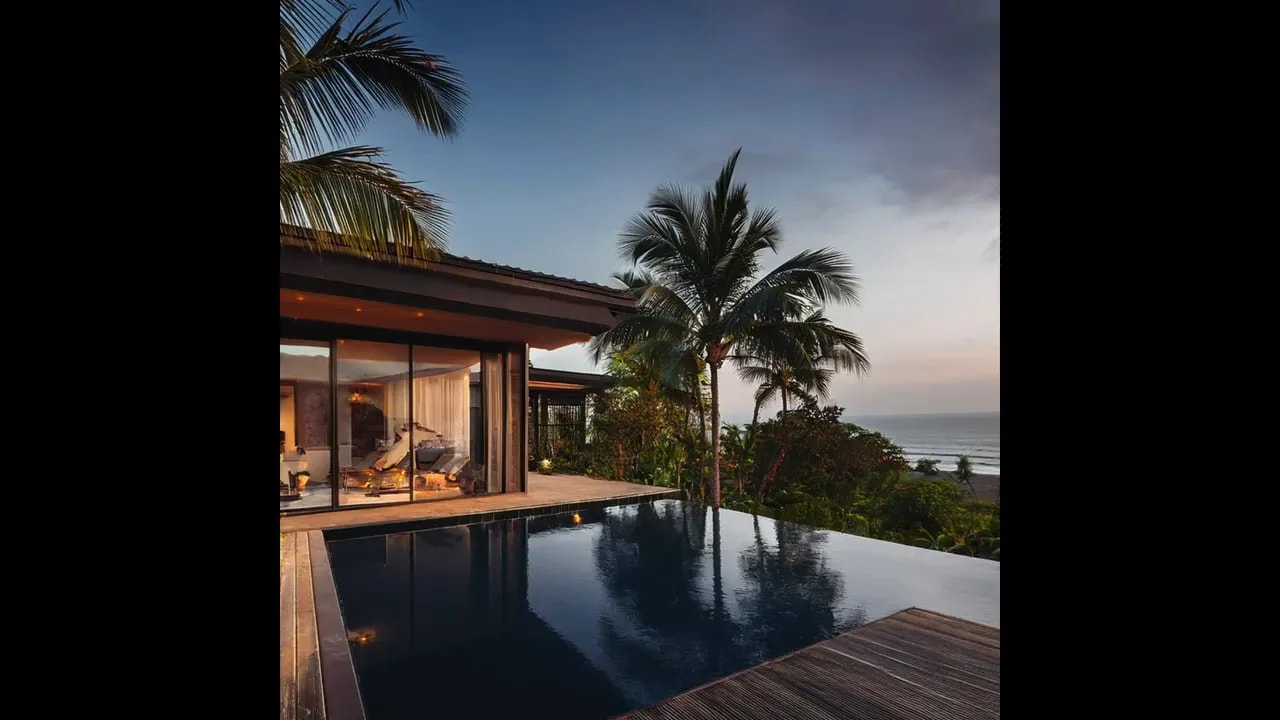
Common mistakes buyers make with costa rica homes and villas
Even attractive properties can disappoint if buyers focus only on aesthetics. Some of the most common mistakes include:
- Overvaluing photos without judging functional layout
- Ignoring shade and exposure in outdoor areas
- Assuming all modern homes perform the same in tropical conditions
- Choosing size over usability
- Failing to match the property type to the ownership goal
A sleek home with dramatic architecture may be less practical than a simpler villa with better circulation, more usable terrace space, and stronger pool placement.
Questions to ask before buying costa rica homes and villas
Use this checklist when comparing properties:
- Is this home meant for personal use, rental use, or both?
- How important are ocean views versus privacy?
- Will the outdoor spaces be comfortable year-round?
- Does the pool layout improve daily living?
- Is the design timeless or mainly trendy?
- Does the home feel spacious because of smart planning or just because of photography?
What design trends stand out in current costa rica homes and villas?
The source material highlights several repeated design patterns across the market:
- Flat-roof modern architecture
- Large glass walls
- Rooftop or elevated terraces
- Infinity-edge and linear pools
- Natural integration with palms, hillside lots, and ocean views
- Indoor-outdoor entertaining zones
These trends align with broader tropical and resort-style design preferences. For additional context on tropical architecture and passive comfort principles, the ArchDaily architecture resource can be useful. For climate context that affects home design and outdoor use, the official Costa Rica tourism site offers general regional information.
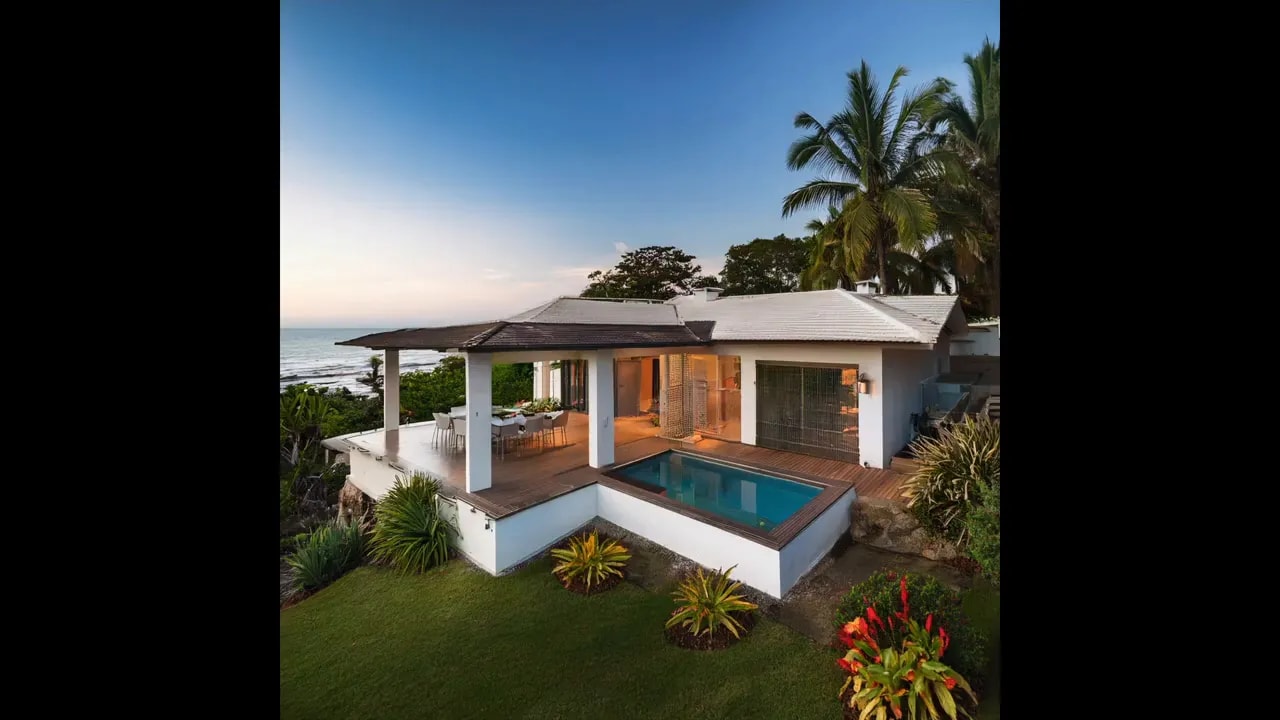
Are costa rica homes and villas good for vacation rentals?
Many can be, especially properties with these traits:
- Private pool
- Strong outdoor seating areas
- Distinctive architecture
- Visible tropical scenery
- Good privacy
Among costa rica homes and villas, rental-oriented units tend to perform best when they create a clear emotional draw. Guests often book the feeling of the property as much as the floor plan itself.
That said, a rental-friendly home is not always the same as the best personal residence. If your priority is your own long stays, comfort and practicality may matter more than listing appeal.
Are luxury villas always the best long-term choice?
Not necessarily. The best choice depends on use case.
A smaller modern villa or well-executed container home may be a better fit if you want lower complexity, easier upkeep, and a sharper focus on a few high-impact spaces. A larger luxury property may be the right move if your priority is entertaining, hosting, prestige, or premium rental positioning.
Final takeaway
The best costa rica homes and villas are not defined by style alone. The strongest properties combine architecture, outdoor living, pool placement, privacy, and view orientation in a way that suits the owner’s real goals.
If you are comparing options, start by deciding whether you want a compact modern home, a guest-friendly Airbnb villa, or a larger luxury residence. Then evaluate how well each property delivers the essentials that matter most in Costa Rica: livable outdoor space, climate-smart design, and a setting that makes the home worth returning to.
Moving to Costa Rica in Your 40s, 50s or 60s? Start Here
Most of our buyers are Canadians and Americans planning a second home, a winter base away from the snow, or a retirement move. Start with the guides below, then book a free call.
Watch: Moving to Costa Rica with Patrick, Aaron and Joseph
Relocation experts Patrick Jager and Aaron Bailey (Your Pura Vida) and Joseph K. answer the questions every mover asks.
Quick answers (YouTube Shorts)
The 2027 Costa Rica relocation series
- How to move to Costa Rica (2027 step-by-step guide)
- How much money do you need to retire in Costa Rica?
- Moving to Costa Rica from Canada
- Moving to Costa Rica from the USA
- Best places to live in Costa Rica
- Affordable beach towns for Canadians
- 5 things you must know before relocating
- Cost of living: Costa Rica vs Toronto
- Financing a Costa Rica property as a Canadian or American
- Property taxes and HOA fees for foreign owners
- How much land costs in Costa Rica
- Buying a villa and renting it out as an American
- Playa Lagarto vs Tamarindo
- Costa Rica real estate market outlook
- Free Costa Rica moving checklist (PDF)
Local help once you arrive
- Find English-speaking lawyers in Guanacaste (Costa Rica Navigator)
- Closing costs on a $300k condo (Costa Rica Navigator)
- Doctors, dentists and clinics for expats (Costa Rica Navigator)
- Which residency fits you? Free residency assessment (Costa Rica Expat Map)
- Cost of living calculator (Costa Rica Expat Map)
- Costa Rica attorneys directory (Costa Rica Expat Map)
- Nosara Realty Group
Questions about a second home, winter rental or retirement purchase? Book a free 15-minute call with Joseph K., Broker, Nosara Realty Group.
Frequently Asked Questions: Buying Property in Costa Rica as a Foreigner
Can foreigners legally buy land and property in Costa Rica?
Yes. Foreign citizens enjoy equal property rights guaranteed under Article 19 of the Costa Rican Constitution. Foreigners can hold fee-simple title directly in their individual name or through a Costa Rican corporation (S.A. or S.R.L.) without requiring Costa Rican residency.
Do I need residency to buy real estate in Costa Rica?
No. You can buy fee-simple property in Costa Rica on a standard tourist visa. However, purchasing real estate valued at $150,000 USD or more qualifies you to apply for Inversionista (Investor) temporary residency under Law 9996.
How much are real estate closing costs in Costa Rica?
Closing costs typically total between 3.5% and 4.0% of the purchase price. This includes the 1.5% government property transfer tax, ~0.82%-1.0% National Registry stamps and fees, 1.0%-1.5% notary/legal fees (plus 13% VAT), and 0.25%-0.50% SUGEF escrow fees. Closing costs are traditionally shared equally between buyer and seller, though negotiated.
What are the annual property taxes in Costa Rica?
The standard annual municipal property tax (Impuesto Territorial) is 0.25% of the property’s registered value. Residential properties with luxury construction values exceeding ₡143,000,000 CRC (~$280,000 USD for 2026) are also subject to the annual Luxury Home Tax (Impuesto Solidario) on a progressive scale from 0.25% to 0.55%.
Can foreign buyers get a mortgage in Costa Rica?
Costa Rican commercial and state banks rarely offer mortgages to non-resident foreigners. Most North American buyers pay all-cash, use home equity lines of credit (HELOC) or cash-out refinances on primary homes in Canada or the US, or negotiate private seller financing (typically 2-5 year terms at 7%-10% interest).
Should I buy property in my personal name or through an S.A. corporation?
Buying through a Costa Rican corporation (Sociedad Anónima or S.R.L.) provides asset protection, operational flexibility for multiple owners or rental management, and simplified estate transfer. However, corporate ownership incurs annual corporate taxes (~$120-$230/yr), resident agent fees, and mandatory Ultimate Beneficial Owner (RTBF) registry disclosures.
Can I buy property in Costa Rica remotely without traveling there?
Yes. You can execute a Special Power of Attorney (Poder Especial) authorizing a trusted local attorney or representative to sign the public transfer deed before a Costa Rican notary. The POA must be notarized and apostilled in your home country or legalized through a Costa Rican consulate.
🏡 Thinking of Buying Property in Costa Rica?
Whether you are searching for a gated community villa in Playa Lagarto, an ocean-view home in Nosara, or a rental income condo in Tamarindo, Joseph K., Broker, Nosara Realty Group provides expert buyer representation tailored to Canadian and American clients.
[…] Costa Rica real estate market guide explains area pricing, while the foreign buyer guide covers title review and closing […]
[…] 🏡 Buying Legalities: Costa Rica Foreign Buyer’s Guide: Step-by-Step Property Purchasing […]
[…] additional property types, see our Foreign Buyer Guide and explore Best Places to Live in Costa […]
[…] For buyers seeking maximum square footage, land size, and purchasing power under $250,000, Playa Lagarto offers an unmatched value proposition. Learn more about buyer costs in our Foreign Buyer Real Estate Guide. […]