 by Joseph
Yes, Americans can legally buy a villa in Costa Rica and rent it out to generate rental income. Foreign buyers enjoy equal constitutional rights to own fee-simple titled property in Costa Rica, and you do not need Costa Rican residency or citizenship to buy real estate or collect rental revenues. However, operating a short-term rental on platforms like Airbnb or VRBO requires registering with the Ministry of Treasury (Tributación Directa), collecting value-added tax (IVA) and income tax, and adhering to local HOA and zoning regulations. Here is the complete 2027 guide for US investors on ownership laws, tax obligations, operating costs, and realistic net rental returns in Guanacaste and coastal Costa Rica.
Quick Answer: Key Facts for American Villa Buyers in Costa Rica
If you are an American evaluating a Costa Rica villa purchase as a vacation home or investment property, keep these foundational rules in mind:
- Equal Ownership Rights: Article 19 of the Costa Rican Constitution guarantees foreigners identical property rights as citizens for titled real estate.
- No Residency Requirement: You can purchase property, hold title, and receive rental revenues on a standard 180-day tourist entry stamp.
- Fee-Simple Title vs. Maritime Zone: Over 95% of inland and coastal development is fee-simple titled. Beachfront land within 200 meters of high tide is Maritime Terrestrial Zone (ZMT) concession land, which requires 51% Costa Rican ownership for concessions.
- Tax & Platform Compliance: Short-term rentals (under 30 days) are subject to 13% Value-Added Tax (IVA). Digital booking channels like Airbnb and VRBO withhold and remit IVA directly on digital bookings. Owners must file annual income tax declarations with Tributación Directa.
- Flexible Ownership Vehicles: Properties can be held in your personal name, a US IRA or 401(k), or a Costa Rican corporation (Sociedad de Responsabilidad Limitada – SRL) for asset protection and ease of management.
- Realistic Net Rental Yields: Net rental returns for well-located Guanacaste villas range from 4% to 8% annually after accounting for HOA fees, property management (15%–30%), utilities, and salt-air maintenance.
For broader relocation and legal setup, see our Costa Rica Relocation Guide and Moving to Costa Rica from the USA Guide.
What Are the Legal Property Ownership Rules for Americans?
Costa Rica is one of the most property-rights-friendly countries in Latin America. The legal system protects foreign ownership explicitly under Article 19 of the National Constitution, giving Americans the same guarantees as local citizens when purchasing fee-simple titled land.
Understanding title categories and legal structures is critical before placing an offer:
- Titled Property (Propiedad en Dominio Titulado): Registered directly with the National Registry (Registro Nacional). Gives full fee-simple ownership. Most residential developments, gated communities, and private villas carry fee-simple title.
- Maritime Terrestrial Zone (ZMT / Concession Land): Refers to the 200-meter strip measured from the high-tide line. The first 50 meters are public domain (no building permitted). The remaining 150 meters are concession land leased from the local municipality. Foreigners who have not resided in Costa Rica for five years cannot hold more than 49% ownership in a ZMT concession corporation unless held in partnership with a Costa Rican citizen.
- Owning via a Costa Rican SRL (LLC): Most American buyers purchase villas through a Costa Rican Sociedad de Responsabilidad Limitada (SRL). An SRL isolates personal liability, simplifies local utility and tax registrations, and allows seamless transfer of corporate shares if sold in the future.
- Purchasing via US Self-Directed IRA / 401(k): US citizens can use self-directed retirement funds to buy real estate in Costa Rica. The IRA holds the title or owns 100% of the Costa Rican SRL, and all rental income and expenses flow directly back through the custodian tax-deferred or tax-free.
How Do Rental Regulations and Taxes Work for Foreign Owners?
Renting out a villa in Costa Rica is straightforward, provided you comply with tax and municipal registration laws. Costa Rica has modernized its short-term rental oversight to ensure fair competition and proper tax collection.
Here are the key compliance steps for American villa owners:
- Tax Registration (Tributación Directa): Every property owner generating rental income must register with the Ministry of Treasury (Dirección General de Tributación) under Form D-140 to receive a tax identification number (NITE or legal corporate ID).
- Value-Added Tax (IVA – 13%): Short-term residential rentals (rentals under 30 days) are subject to 13% IVA. Major booking platforms like Airbnb and VRBO automatically calculate, collect, and remit 13% IVA on reservations made through their websites. If you accept direct bookings, you must collect 13% IVA and declare it monthly via Form D-104. Rentals over 30 consecutive days are exempt from IVA.
- Income Tax (Impuesto sobre la Renta): Rental profits are subject to Costa Rican income tax. Owners can opt for the standard progressive income tax regime or a simplified capital gains/rental regime (typically 12.5% effective tax rate on gross rental income, or progressive rates after deductible expenses like management, repairs, and utilities).
- US IRS Tax Reporting: As a US citizen or green card holder, you must report worldwide income to the IRS. Rental revenues and deductible operating expenses are filed on Schedule E (Form 1040). You can utilize the Foreign Tax Credit (Form 1116) to prevent double taxation on taxes paid to Costa Rica. Foreign bank accounts or local corporate holdings above $10,000 USD must be reported annually via FBAR (FinCEN Form 114).
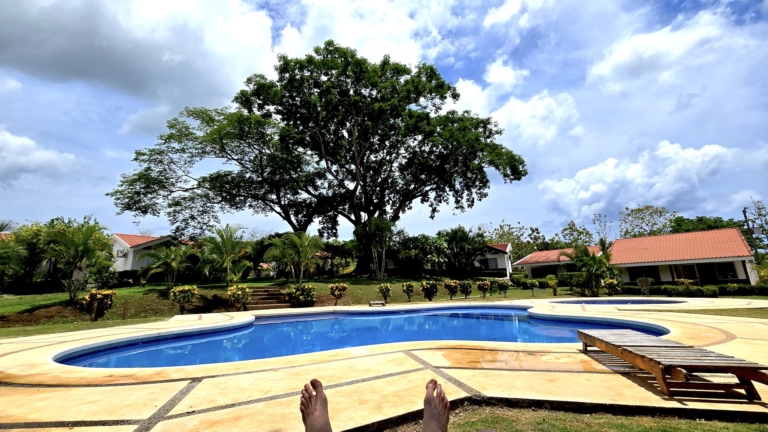
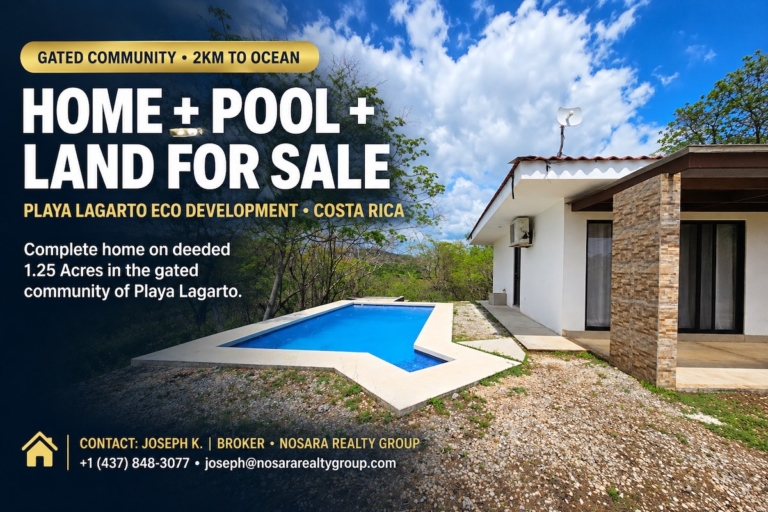
- HOA and Local Regulations: Check the condominium bylaws (Reglamento de Condominio) of your community. Gated eco-communities like Playa Lagarto permit short-term rentals, whereas certain private residential enclaves restrict commercial rental activity.
Realistic Villa Rental Income and Operating Costs (2027 Data)
A common pitfall for foreign investors is relying on inflated gross revenue projections. In coastal Guanacaste, vacation rental demand follows clear seasonal cycles that dictate real annual income.
Seasonality in Guanacaste:
- High Season (December to April): Peak tourism months with dry, sunny weather. Occupancy rates average 70%–85%, with premium nightly pricing during Christmas, New Year, and Easter (Semana Santa).
- Green Season (May to November): Lush tropical weather with afternoon showers. Occupancy averages 40%–55%, supported by surfers, remote workers, and eco-tourists taking advantage of lower seasonal rates.
To calculate your true return on investment, model all recurring operating expenses against gross occupancy revenues:
| Expense Category | Typical Planning Cost | Notes & Key Factors |
|---|---|---|
| Property Management Fee | 15% – 30% of gross revenue | Covers guest check-in, marketing, housekeeping coordination, and maintenance. |
| HOA / Community Fee | $150 – $400 / month | Covers 24/7 security, shared pool care, water infrastructure, and common area upkeep. |
| Utilities & High-Speed Internet | $150 – $350 / month | Air conditioning usage during high season is the largest variable utility expense. |
| Municipal Property Tax | 0.25% of registered value per year | Calculated annually by the local canton municipality (e.g., $375/year on a $150,000 villa). |
| Maintenance & Salt-Air Wear | 1% – 2% of property value per year | Coastal moisture requires periodic pool servicing, exterior painting, and A/C checks. |
| Local Accounting & Filing | $300 – $800 / year | Covers monthly/annual tax filings with Tributación Directa and corporate renewal. |
Realistic ROI Target: A well-managed 2-bedroom villa priced between $140,000 and $250,000 typically delivers a net ROI of 4% to 8% per year after all expenses, taxes, and management fees. For detailed market context, review our Costa Rica Real Estate Market Guide.
Villa vs. Condo vs. Single-Family Home: Comparing Rental Models
Depending on your budget and involvement preference, different property types offer distinct advantages for American rental investors:
| Property Model | Price Range (USD) | Best Suited For | Management Effort | Rental Strategy |
|---|---|---|---|---|
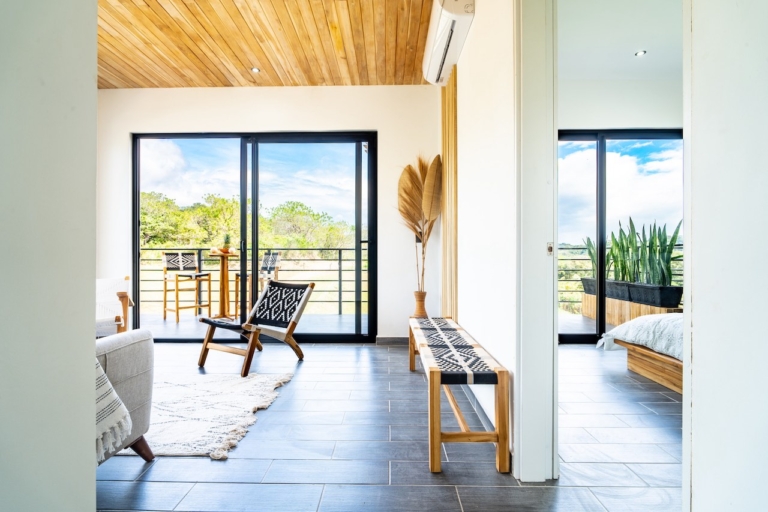
| Gated Community Villa | $130,000 – $250,000 | Turnkey investors, vacation buyers | Low (HOA covers grounds/security) | Short-term Airbnb & seasonal leases |
| Beachfront Condo | $250,000 – $500,000+ | High-occupancy beach seekers | Low (Building HOA manages exterior) | High-turnover short-term rentals |
| Custom House on Land | $200,000 – $600,000+ | Long-term residents & families | Medium-High (Direct maintenance) | Long-term residential or luxury rental |
For additional property types, see our Foreign Buyer Guide and explore Best Places to Live in Costa Rica.
Step-by-Step: How an American Buys and Launches a Rental Villa
Buying real estate in Costa Rica follows a structured legal process. Work with an experienced broker and a reputable Costa Rican real estate attorney to complete your purchase safely:
- Define Investment Criteria & Location: Compare quiet gated eco-communities (like Playa Lagarto) with bustling beach towns (Tamarindo, Nosara). Evaluate rental demand, HOA rules, and proximity to airports like Liberia International (LIR).
- Submit an Option to Purchase (Oferta de Compra): Once a property is selected, your agent drafts a written offer specifying purchase price, earnest money deposit (typically 10%), closing timeline, and contingencies.
- Establish SUGEF Escrow: Transfer funds into a regulated Costa Rican escrow account (SUGEF compliant) or a US-based escrow agency. Earnest money deposits are held safely in escrow during due diligence.
- Legal Due Diligence: Your closing attorney performs a full title search in the National Registry (Registro Nacional) to verify fee-simple status, check for liens or encumbrances, confirm municipal tax payments, and review survey maps (plano catastrado).
- Corporate Setup (Optional SRL): Your attorney incorporates a Costa Rican SRL to hold the title, set up local bank accounts, and register for corporate tax numbers.
- Closing & Title Transfer: At closing, the public deed (escritura) is signed before a Costa Rican notary public, final funds are released from escrow, and the property is registered under your name or corporation. Closing costs (transfer tax, notary fees, legal stamps) total approximately 3.5% to 4.0% of the purchase price.
- Onboard Management & Tax Registration: Register with Tributación Directa, hire a reliable local property management team, list the property on Airbnb and VRBO, and start welcoming guests.
To browse active villas and land listings in Guanacaste today, visit our Costa Rica Property Catalog.


🏡 Thinking of Buying a Rental Villa in Costa Rica?
Whether you are evaluating a turnkey villa in Playa Lagarto, an ocean-view property in Nosara, or a rental condo in Tamarindo, Yossi Kaplan, MBA provides experienced buyer representation tailored to American and Canadian clients.
Frequently Asked Questions About Americans Buying and Renting Villas
Can a US citizen buy real estate in Costa Rica?
Yes, US citizens can legally buy and own titled real estate in Costa Rica with the exact same constitutional ownership rights as Costa Rican citizens.
Do I need Costa Rican residency to rent out my villa?
No. You do not need Costa Rican residency or citizenship to own real estate or collect rental revenues. Foreigners can manage investments on standard tourist entry stamps.
How are short-term rental taxes handled on Airbnb in Costa Rica?
Short-term rentals under 30 days are subject to 13% Value-Added Tax (IVA). Airbnb and VRBO collect and remit IVA directly on digital bookings. Owners declare net rental income annually with Tributación Directa.
What are the main costs of owning a rental villa in Guanacaste?
Primary operating costs include property management fees (15%–30%), HOA maintenance fees ($150–$400/month), electricity/AC utilities, municipal property tax (0.25%), and routine salt-air maintenance.
Is seller financing available for Americans buying villas?
Yes, seller financing is common for foreign buyers in Costa Rica. Terms typically require a 30% to 50% down payment with interest rates between 6% and 9% over a 3 to 5 year term.
What net ROI can an American investor expect on a Costa Rica villa?
Well-located 2-bedroom Guanacaste villas generally produce a net return on investment (ROI) of 4% to 8% per year after all operating expenses, taxes, and property management fees.